
The Economic Community of Central African States (ECCAS) composed of the 11 member states (Angola, Burundi, Cameroon, Central African Republic, Congo, DR Congo, Gabon, Equatorial Guinea, Rwanda, Sao Tome & Principe and Chad) is trapped in a world marked by the proliferation of conflicts, volatility of markets, disruption of supply chains, rising energy and fertilizer costs and increasing climatic hazards. Under these circumstances, agriculture in the subregion is no longer merely an economic and social sector but must become an instrument of sovereignty, political stability, international influence and collective security.
In June 2026, the World Bank noted that, despite overall sufficient global food supplies, high costs and disruptions in supply chains continued to exert pressure on food prices and accessibility.
This situation recalls that excessive dependence on international markets particularly exposes importing countries to trade decisions, geopolitical crises and logistical disruptions on which they have little means of action. (BM Report, 2026)
In this context, food and nutrition security must be understood in its essential dimension of national and regional security. A country or region unable to produce a substantial part of its food, secure its inputs and control its supply channels remains vulnerable, regardless of the size of its natural resources and the apparent growth of its economy.
For Central Africa, the challenge is to lay the solid foundation for agricultural diplomacy, mainly oriented towards seeking external assistance for genuine agricultural economic diplomacy, capable of mobilizing regional potential, attracting productive investment, organising complementarities between ECCAS member States and positioning the subregion as a credible player in the continent's food, environmental and trade balances.
Central Africa brings together ecological spaces of remarkable diversity from Sahelian and pastoral areas, savannahs and rainforests to high plateaus, valleys, river basins of lakes, coastal areas and maritime spaces. This diversity allows the region to develop a wide range of plant, animal, fisheries, forestry and aquaculture production.
default
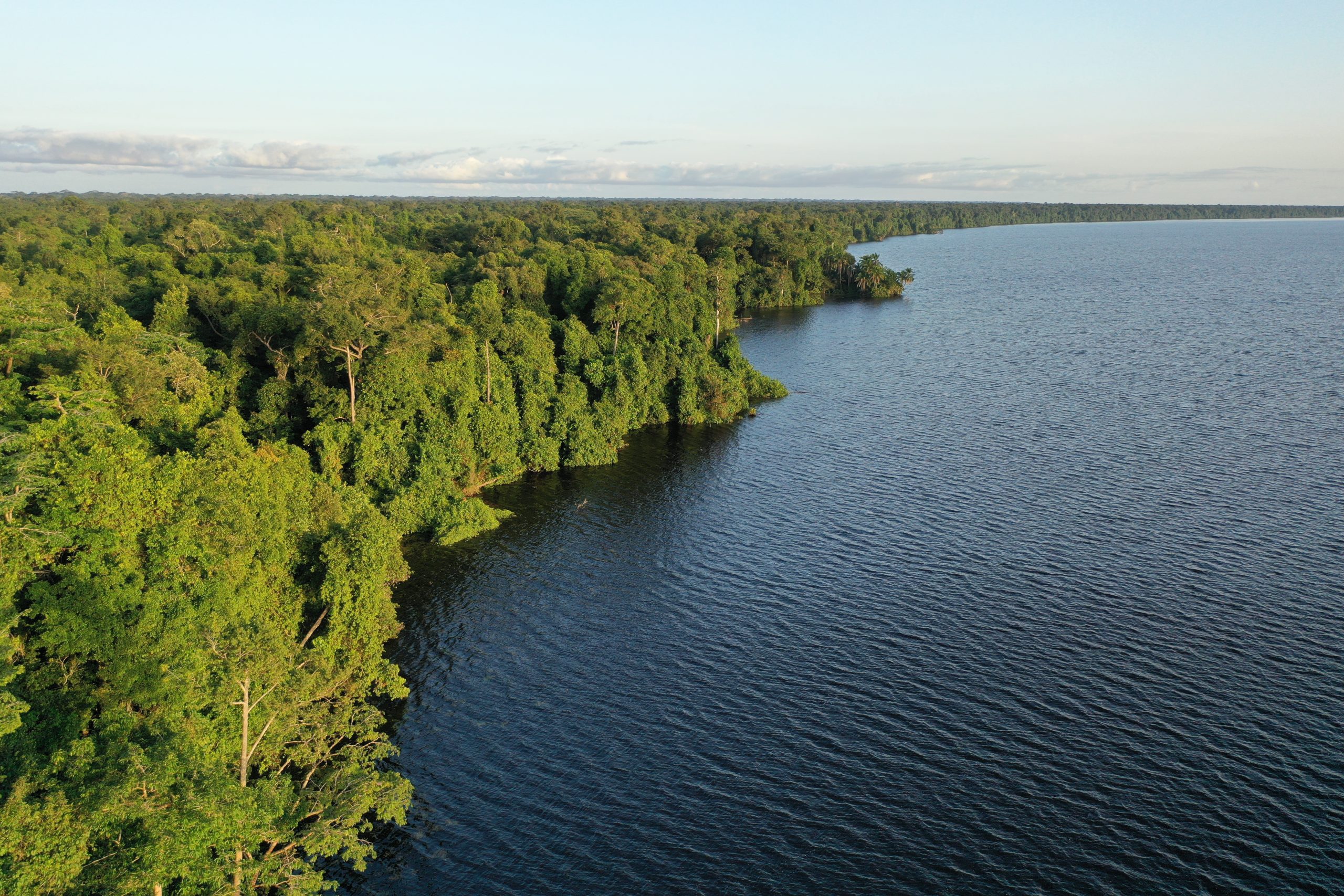
From the Lake Chad Basin to the Congo Basin, from the Great Lakes highlands to the seafronts of the Gulf of Guinea and the Atlantic Ocean, Central Africa has land, surface water and groundwater, pasture, genetic resources, exceptional biodiversity and important urban opportunities. And the Congo Basin alone is home to the second largest tropical forest in the world and would be an essential asset for climate regulation, biodiversity, national economies and people's livelihoods.
Central Africa also has considerable potential in cereals, rice, roots and tubers, plantain bananas, fruits, vegetables, coffee, cocoa, cotton, oil palms, hevea, non-wood forest products, cattle farming, small ruminants, poultry farming, continental fisheries, sea fishing and aquaculture.
The river system in the Congo, the large lakes and the many rivers offer important opportunities for fisheries and aquaculture development which are still underdeveloped.
To these directly productive resources are added reserves of hydrocarbons, natural gas, potash and phosphate that can support a regional fertilizer industry. The United Nations Economic Commission for Africa believes that these allocations justify the establishment of a regional value chain for fertilizers, including NPK fertilizers, to reduce external dependence and improve agricultural productivity.
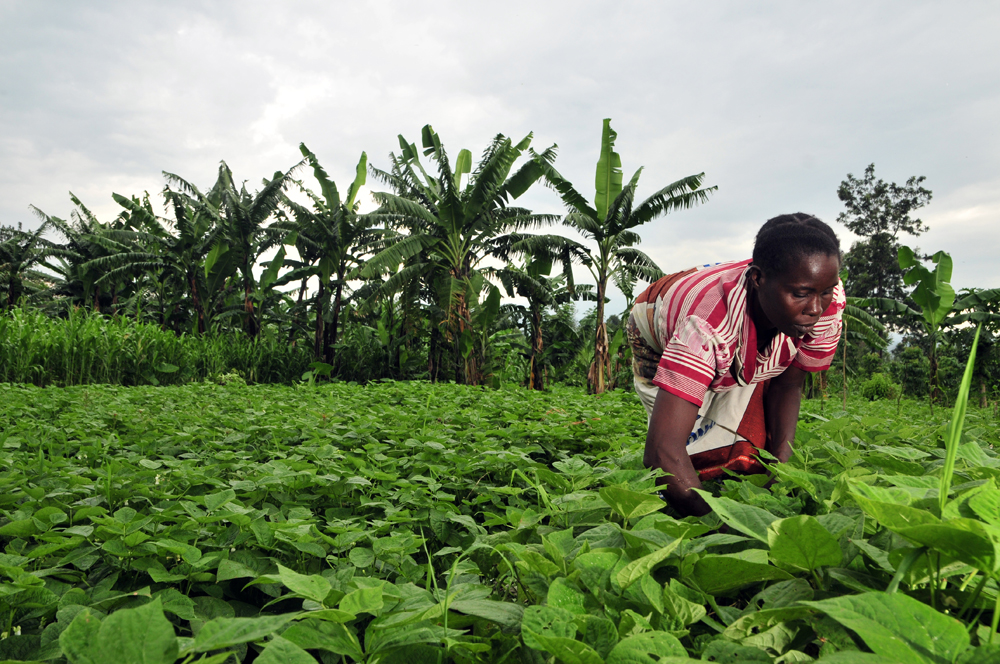
However, this potential contrasts with the still limited level of production, local transformation and intraregional trade. Agricultural economies remain fragmented, family farms are inadequately accompanied, rural and logistical infrastructure remains weak and post-harvest losses are significant. This is compounded by difficulties in accessing energy, financing, improved seeds, fertilizers, irrigation, veterinary services, technology and markets.
The weak sanitary and phytosanitary systems, the multiplicity of border controls, insufficient laboratories, the lack of mutual recognition of certifications and the persistence of non-tariff barriers also limit the movement of agricultural and food products.
The issue is therefore not one of lack of resources, but one of their economic organization, transformation and strategic projection. In this sense, agricultural economic diplomacy remains the only instrument of regional power.
For Central Africa, this diplomacy must be built around a common vision to make the subregion an integrated area for the production, processing and trade of agro-sylvo-pastoral and fisheries products, capable of progressively ensuring food sovereignty while contributing to the needs of the African and international market.
This ambition is in line with the revised ECCAS Treaty and the commitments of the Kampala Declaration of the DPAA. ECCAS member States have made a commitment to cooperate in the areas of agriculture, food and nutrition security and animal and fisheries resources.
The implementation of these commitments includes increased production, local product development, improved rural incomes, harmonization of agricultural policies, trade development and the creation of emergency food reserves and stocks, with an increase of 45 per cent in African agri-food production and a mobilization of $100 billion in investments over the decade 2026-2035.
These regional and continental instruments require ECCAS to build regional value chains rather than adding national projects. It will be necessary to organise productive complementarity between Member States. No country alone can develop all sectors, produce all inputs, finance all infrastructure and satisfy all markets.
ECCAS should promote smart regional specialization based on the comparative advantages of different spaces.
This option will provide livestock and meat production in pastoral areas, rice farming in plains, valleys and irrigable perimeters, fishing and aquaculture around river basins, lakes and coastal areas, cassava, corn, plantain bananas and legumes in forest and savannah areas, vegetable and fruit production in peri-urban and highland areas and the processing of cocoa, coffee, cotton, oilseeds and forest products in appropriate production areas.
The aim must no longer be to have parallel agricultural policies, but to build a genuine regional productive system with priority sectors Structured around rice, corn, cassava, fertilizers, meat, milk, fish, feed, leather, cocoa, coffee, cotton, vegetable oils and non-wood forest products. These channels must be linked through supply contracts, guarantee mechanisms, storage infrastructure, processing units and regional marketing platforms.
From this perspective, ECCAS's agricultural diplomacy must be a diplomacy of concrete and bankable projects, not a mere diplomacy of declarations. Central Africa must not oppose agriculture and environmental protection. It must promote a model that combines food security, biodiversity conservation, land restoration, agroforestry and compensation for environmental services.
The Congo Basin forest contributes to global climate regulation, precipitation regime, soil fertility, biodiversity and livelihoods for millions of people. It can no longer be seen solely as a reservoir of wood or carbon. It is also an area of food, medicinal, fisheries and agroforestry production.
Central Africa must therefore explicitly integrate the transformation of food systems into the conservation and preservation of natural resources. Climate finance, biodiversity funds, payments for environmental services and carbon markets must support agroforestry, climate-smart agriculture, sustainable irrigation, landscape restoration, pastoral management and reduction of post-harvest losses.
Central Africa must diversify its international partnerships without falling into excessive dependence on one partner. Its relations with the European Union, the United States, China, India, Brazil, Türkiye, the Gulf countries, Japan, Korea and the international financial institutions must be oriented towards the strategic interests of the region. Each partnership should include obligations for local content, training, on-site transformation and integration of small and medium-sized regional enterprises.
In several parts of Central Africa, conflicts and displacements of people are directly related to access to land, water, pasture and natural resources. Tensions between farmers and farmers, cross-border trafficking, rural insecurity and market disruptions undermine social cohesion.
A regional agricultural strategy must therefore include a conflict prevention dimension. The security of transhumance corridors, the concerted management of water resources, the clarification of land rights, the creation of rural jobs and the organisation of border markets can help reduce tensions.
Agricultural investment in fragile areas should not be seen as a sectoral intervention among others. It constitutes an investment in peace, stabilization of territories and the prevention of forced migration.
Agricultural diplomacy must therefore be closely linked with regional peace and security mechanisms. Feeding people, generating income and restoring livelihoods are essential conditions for political stability.
ECCAS will become the focal point for coordination and leadership of this new diplomacy. Its role is not to replace States, but to build regional public goods that no country can effectively develop alone.
Finally, ECCAS must help build a new regional narrative. Central Africa should no longer be presented as a region of crises, forests, oil or minerals. It must also be recognized as a land of production, innovation, transformation and solutions for the continent's food and environmental future.
The geostrategic positioning of Central Africa cannot be based on the export of raw materials or only on the importance of its natural resources. It must build on its ability to transform these resources into food, employment, income, technology and economic power. Agricultural economic diplomacy is one of the most promising levers of regional integration. It will bring states closer to concrete interests, link production basins to markets, reduce external dependence and increase the region's bargaining power.
Central Africa must now speak with one voice when negotiating its markets, financing, standards, technologies and compensation for its environmental services. It must no longer only ask how to feed its population. It must determine how to produce more, transform locally, trade among its States, supply the continent and use its agricultural potential as an instrument of peace, sovereignty and influence. The challenge is to make Central Africa not only a global reservoir of natural resources, but also a nourishing, agro-industrial, ecological and geostrategic power for its people and for African integration.
Agro-Economist Engineer