
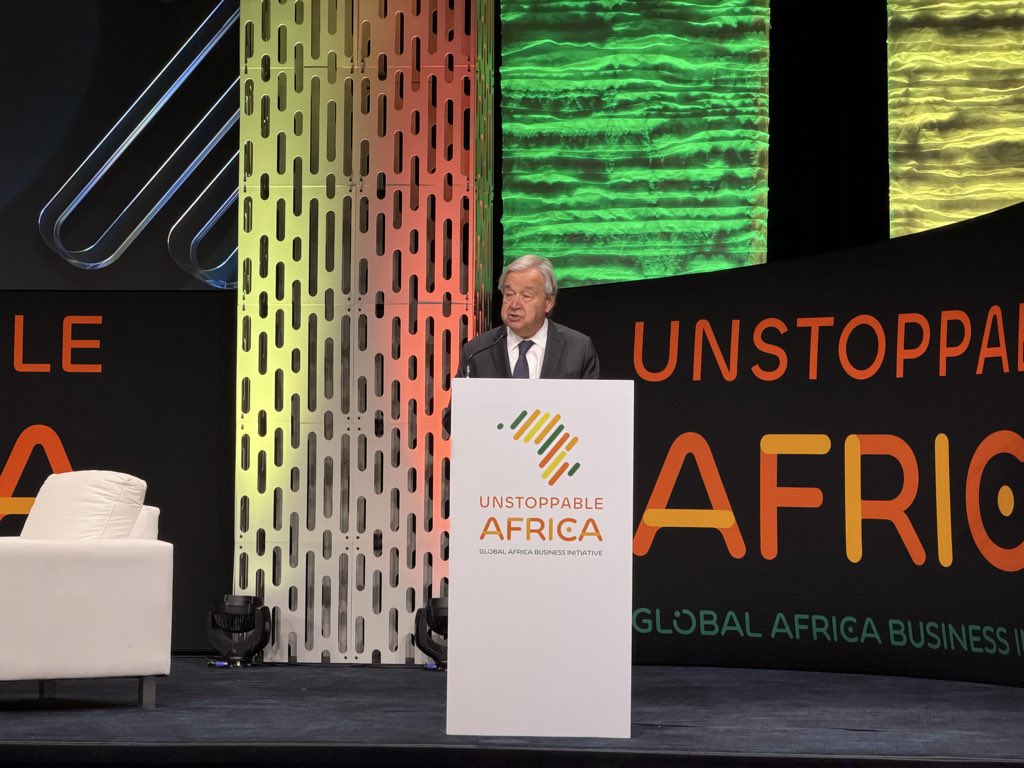
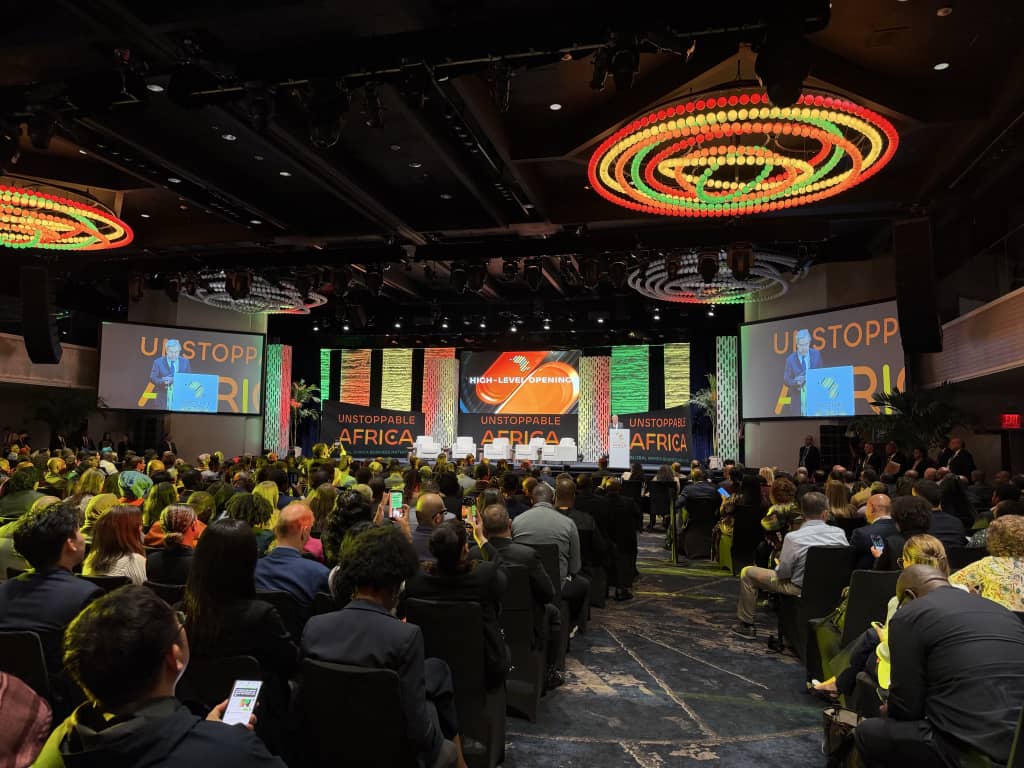
On 20 September 2026 in New York, in front of the heads of state, investors and business leaders gathered at Marriott Marquis, António Guterres made an unequivocal appeal: « More looting ». The Secretary-General of the United Nations urges us to break with the economic model that reduces Africa to the role of a mere supplier of raw materials, without fully benefiting from the wealth created by their transformation.On.
With 30% of the world's mineral resources and 60% of the solar potential, Africa has major assets. Its workforce, the most dynamic in the world, provides an estimated $3 trillion in business opportunity. For Guterres, the time when Africa had to convince of its potential is over: « It is no longer a matter of doing business in Africa, but of doing business with Africa. »
The fifth edition of Unstoppable Africa, organized by the Global Africa Business Initiative (GABI) in partnership with the UN and the African Union, illustrates this paradigm shift: less discourse on the « potential » Africa, more transactions, investment and infrastructure to hold value on the continent.
Produce rather than export
The imbalance remains glaring: Africa provides an essential part of the world's critical ores and raw materials, but receives little of the wealth resulting from their transformation. For António Guterres It is urgent that these resources create local value and decent jobs, instead of being shipped abroad.
Changes are already visible: Kenya produces more than 90% of its electricity from renewable sources. Morocco is preparing a submarine cable to export green electricity to Europe.
Tunisia is imposing itself in artificial intelligence and computer vision. Rwanda is experimenting with drone delivery nationwide. In the cultural industries, Nigeria, South Africa and Senegal export music and cinema.
Fintech is now the most capital-intensive sector in Africa, while FTACAf trade is expected to reach $230 billion this year.
Constraint growth
Despite international turbulence, the African economy grew by 4.4 per cent in 2025. But turning that growth into industrialization requires capital that the continent struggles to obtain on affordable terms. The wars in Ukraine and the Middle East, rising costs and interest rates add to the difficulties, while paradoxically offering the opportunity to build more autonomous economies.
Reforming the global financial architecture
Secretary-General denounced international financial architecture « created by the rich, for the rich ». It calls on multilateral development banks to become « bigger, bolder and better », mobilising more private financing to Africa. It also stresses the need to invest in young people and women, who account for more than half of the continent's entrepreneurs but receive only a fraction of investment.
An economic and political battle
Finally, Guterres linked this economic battle to that of international representation. Africa, « double victim of colonialism », must obtain a permanent presence on the UN Security Council.
If the continent weighs more and more in the world economy, it must also weigh on the rules that organize it.« A rising Africa is a rising world »concluded by urging international partners to support this transformation.
Mamadou SY