
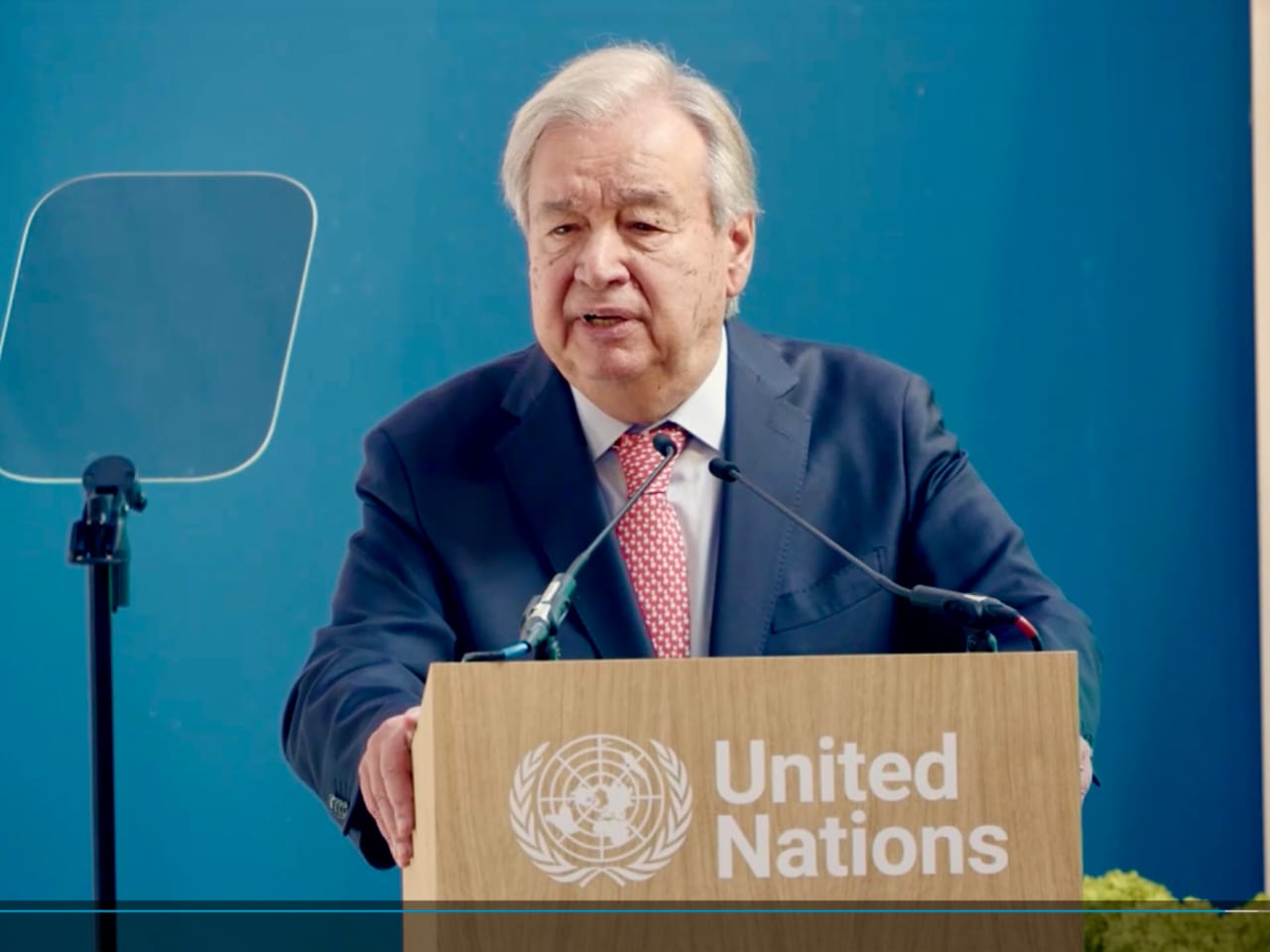
At the London Climate Action Week, the UN Secretary-General warned against « a tale of two crises » and energy and urged the international community to accelerate the transition to clean energy, emphasizing climate justice and transparency. He also made a strong appeal for Africa, a resource-rich continent that is still undersupported by global investment.
The United Nations Secretary-General, António Guterres, delivered a special address in London on 23 June, describing the planet as taking place in London. « a tale of two crises » A climate crisis that brings the world closer to irreversible tipping points, and an energy crisis that reveals the fragility of a hydrocarbon-dependent model. According to him, fossil fuels are at the root of both threats and the response must be unique: a rapid and fair transition to renewable energys, with enhanced adaptation and increased resilience for the most vulnerable populations.
Two major announcements and seven steps for a fair transition
António Guterres presented a seven-point road map, ranging from the strict limitation of warming to 1.5 °C to the reduction of methane emissions, electrification of transport and industries, the modernization of electricity grids and the protection of scientific integrity. He recalled that renewable energy is now the cheapest and fastest-to-deploy source of electricity, citing the decline in electricity consumption. spectacular solar costs (–90 % since 2010), terrestrial wind energy (–70 %) and battery storage (–95 %).
The Secretary-General has issued a Global Call for Action on Methane, targeting the waste, agriculture and especially hydrocarbons sectors, in order to rapidly reduce this gas, which accounts for one third of the global warming. It also proposed an Initiative for the Environmental Transparency of Artificial Intelligence, inviting large companies in the sector to publish the full ecological footprint of their systems and to feed their renewable energy data centres by 2030.
A strong message for Africa
The African continent, he stressed, has 60% of the world's best solar resources and 30% of critical minerals, but receives only 2% of global clean energy investments. More than 600 million Africans remain without electricity, a situation judged « unjust » and « a missed opportunity » Africa and the world.
António Guterres called for the 300 billion dollars pledged to developing countries to be realized and to mobilize 1,300 billion a year by 2035 for equitable climate financing. « Lhe facts count. Science counts. Information integrity counts »announced the convening of leaders in September to prepare COP31 in Türkiye. An urgent call for action, as the planet's energy and climate future is being played out today.
Mamadou SY