
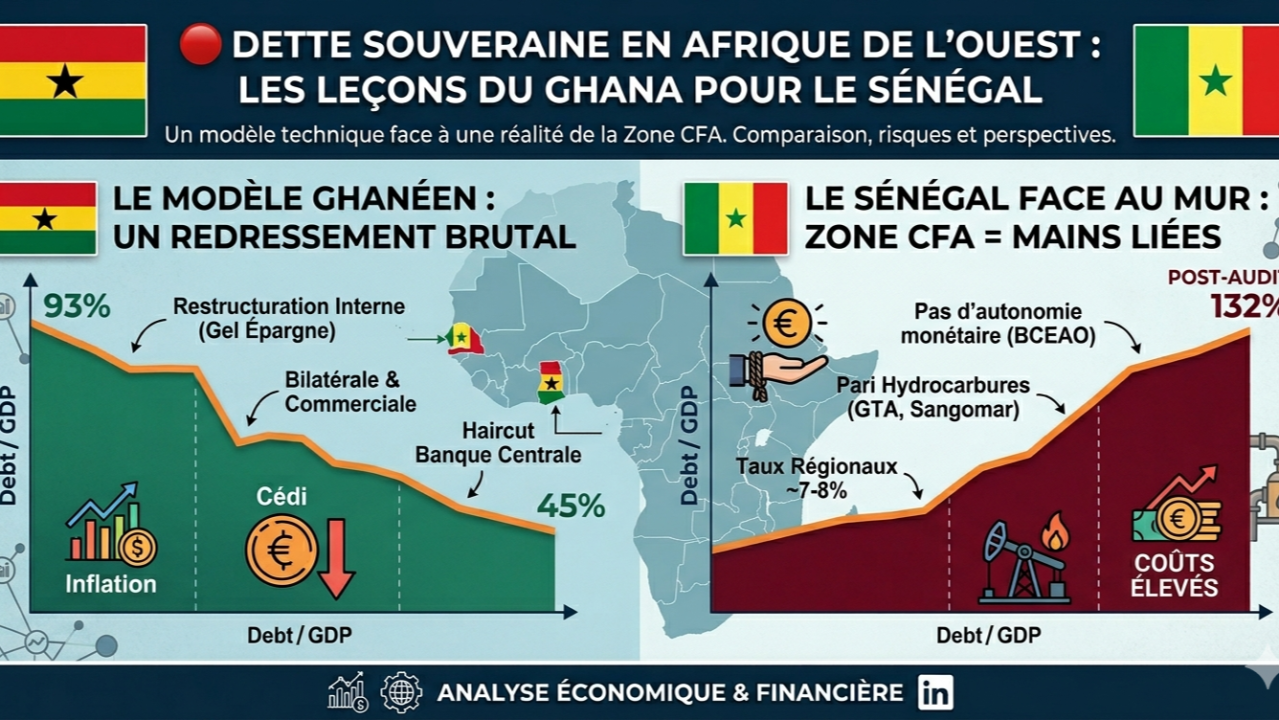
Ghana has just concluded one of the most complex debt restructurings in sub-Saharan Africa. With a debt increased from 93% to ~45% of GDP in less than 3 years, « Ghanaian miracle » shows a technical model. But at what cost? And above all, are these solutions transferable in Senegal, stuck at 132% debt/post-audit GDP? Ghana Model: Brutal but Effective Recovery President Mahama announced on May 15, 2026 that Ghana had formally concluded its $3 billion support program with the International Monetary Fund (IMF). The IMF's $3 billion bailout plan was structured around three simultaneous restructurings: 1. Internal (2023): Forced exchange of local treasury bills for new securities at reduced rates → National savings freeze 2. Bilateral (2024-2025): USD 2.8 billion carry-over due to 25...
Log in to access this exclusive content
This publication is reserved for readers who subscribe to Diplomatika.
Sign in to your account or sign up to view
all our analyses, reports and premium content.