
In the collective imagination, diplomacy is a matter of public speech, negotiations and summits, while intelligence belongs to the discreet world of security services, sources and protected information. In Africa, however, this separation is largely artificial. Contemporary crises — terrorism, cross-border trafficking, internal conflicts, cyber threats, forced migration, external interference or geopolitical rivalries — require States to circulate information among those who collect it, those who analyse it and those who decide. Diplomacy and intelligence are therefore not two parallel worlds: they constitute two complementary instruments for the external action of the State.
This complementarity is particularly evident in African peace and security mechanisms. The African Union (AU) has gradually institutionalized mechanisms where alert, security analysis, conflict prevention and political decision-making respond. The African Peace and Security Architecture (AAPS/ASSA) includes the Peace and Security Council, the Continental Early Warning System (CEWS), the Wise Men's Group and regional mechanisms (African Union 2020).
The aim is not only to produce information: it is to transform information into political decision-making and, where necessary, into diplomatic action.
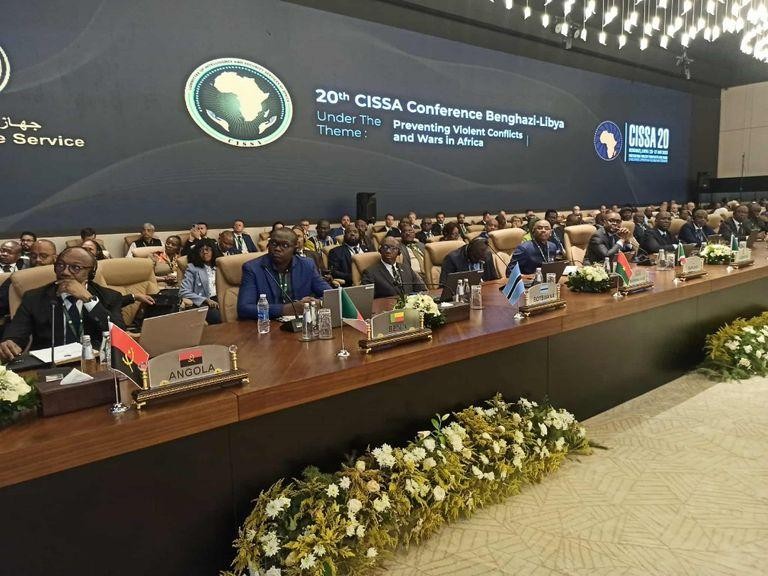
The first example is continental. Established in 2004, the Committee of Intelligence and Security Services of Africa (CISSA) is a multilateral platform for cooperation between African intelligence and security services. The AU Assembly formally approved its establishment in 2005 and called for its collaboration with the Union and its bodies (African Union Assembly, 2005). The existence of CISSA reveals a major development: intelligence services are no longer only considered strictly national instruments; They also participate in a collective production of analysis on threats beyond borders.
This cooperation has a direct diplomatic dimension. Information can feed into positions taken by States in regional forums, predict a crisis or inform mediation. Conversely, diplomats have political, human and institutional access that can help to understand an environment in which raw data remains ambiguous.
Diplomacy thus gives intelligence its political context, while intelligence gives diplomacy additional analytical depth. Cave (2026) points out precisely that CISSA is part of a logic of collective responsibility and is an important provider of security information for African institutions.
The second example is the CEWS of the African Union.. Its role is to collect and analyse information in order to identify the risks of conflict and to help decision makers to intervene before crises become uncontrollable. The system operates in relation to observation and monitoring mechanisms of the regional economic communities (African Union, 2019).
This architecture brings together very concrete intelligence, prevention and diplomacy Information on an increase in electoral tensions, armed mobilization or community crisis is of strategic value only if it can lead to a political initiative, fact-finding mission, mediation or preventive approach.
The experience of the Intergovernmental Authority on Development (IGAD) in the Horn of Africa further illustrates this articulation.. Since 2002, its Conflict Early Warning and Response Mechanism (CEWARN) has received, produced, analysed and shared information on potentially violent conflicts to inform decision makers (IGAD, 2024).
In 2024, IGAD continued to produce early warning analyses, including Ethiopia, Somalia and Sudan, while developing digital monitoring tools. These data do not replace diplomacy: they allow mediators and policymakers to better identify actors, risk factors and possibilities for intervention. Experience thus shows that intelligence can be conceived not only as a security instrument, but also as a tool for diplomatic prevention.
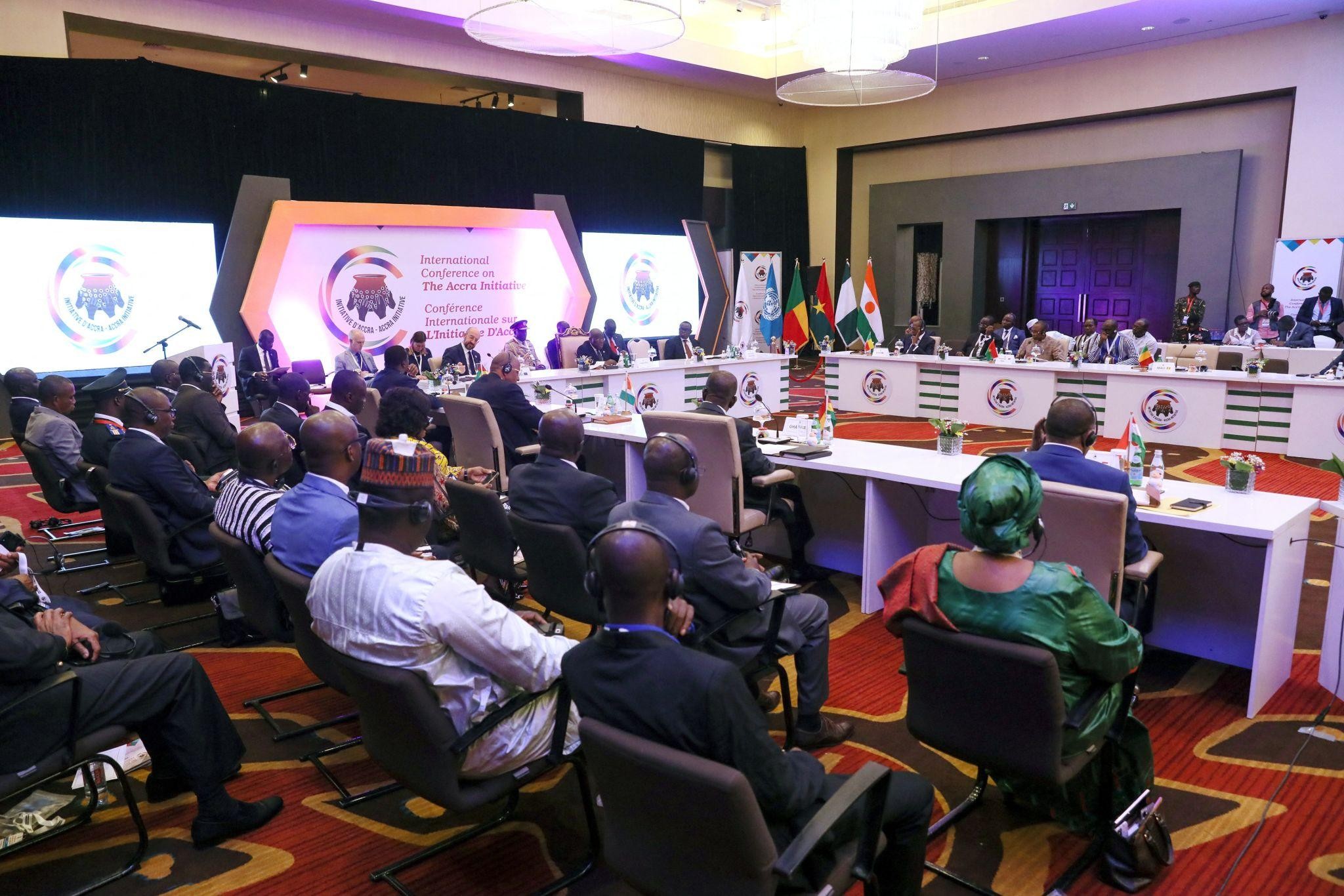
In West Africa, cooperation between intelligence, security and diplomacy appears in the ECOWAS framework.. Its action plan against terrorism for 2020-2024 made the direct sharing of information and intelligence between security services a priority. The document included improved coordination of services, digitization of criminal data, development of regional terrorist bases and regular meetings of intelligence officials (ECOWAS 2020). In August 2024, ECOWAS Chiefs of Staff again stressed the exchange of intelligence and the pooling of capabilities in the face of terrorism and transnational crime (ECOWAS, 2024).
The case of the West African Police Information System (WAPIS) is particularly interesting because it is located at the border of police intelligence, judicial cooperation and diplomatic action.. In October 2024, experts from the ECOWAS Ministries of Interior, Justice and Foreign Affairs met in Dakar to discuss the WAPIS regional data exchange platform.
It aims to provide police officers with access to relevant criminal information held in different countries in order to identify suspects, improve the analysis of criminal networks and strengthen judicial cooperation (ECOWAS, 2024b). The fact that the Ministries of Foreign Affairs are involved in the process reminds one essential reality: the flow of security data between States is also a matter of sovereignty, international law and political confidence.
Another concrete example is the fight against Boko Haram in the Lake Chad basin. The Multinational Joint Task Force (MNJTF), bringing together Benin, Cameroon, Chad, Niger and Nigeria, relies on military cooperation, but its effectiveness also depends on the sharing of information. In January 2025, the AU Peace and Security Council stressed that cooperation and information exchange among the countries of the region was essential to the operations of the MNJTF (African Union Peace and Security Council, 2025).
Recent work confirms, however, that insufficient intelligence sharing, lack of confidence and capacity gaps continue to limit the effectiveness of regional cooperation (Akinola & Magam-Chaka, 2025). The diplomatic lesson was important: a common military mechanism could not function sustainably without a minimum of political confidence among States sharing information.
In the south of the continent, SADC police cooperation provides a fourth model. The Southern African Regional Police Chiefs Cooperation Organization (SARPCCO), integrated with SADC, facilitates the exchange of information and intelligence, the collection and analysis of regional data and cooperation against cross-border crimes (SADC, 2018). The regional strategy to combat transnational organized crime also includes joint operations and the strengthening of the exchange of information between the relevant agencies (SADC, 2024). It shows that cooperation between intelligence and diplomacy is not limited to terrorism, but also includes drug trafficking, trafficking in persons, financial crime, cybercrime and wildlife trafficking.
Why is this cooperation still difficult? The first reason is trust. Intelligence is, by nature, sensitive information. A service is reluctant to share a source, method or information whose disclosure could reveal its capabilities. In several African regions, this mistrust is reinforced by political rivalries, regime changes and differences of interest. The problem is therefore not only technical. He is deeply diplomatic. For intelligence sharing to work, states must believe that information will not be used against their interests, leaders or partners.
The second challenge concerns the border between national security and international cooperation. The intelligence services first defend the interests of their state.
Diplomats, on the other hand, must preserve bilateral or multilateral relations, even when interests do not coincide perfectly.
Security information can therefore have considerable diplomatic consequences. The recent case of the French intelligence officer Yann Vezilier, accredited to the French embassy in Bamako and detained in Mali before his release in August 2026, illustrates in a spectacular way the sensitivity of this interface between intelligence, diplomatic status and national sovereignty (Le Monde, 2026). It recalls that an intelligence officer may become, in a crisis context, a major diplomatic issue.
The third challenge is governance. Information cannot be permanently integrated into diplomatic action without rules on confidentiality, liability and use of data. The development of African digital systems makes this issue even more urgent. Cooperation must protect personal information, sources and judicial procedures while allowing for a sufficiently rapid flow of information. The challenge is therefore to build a « institutionalised confidence »based on common rules rather than on the personal relationship between those responsible.
Finally, there is a geopolitical dimension. African States cooperate with each other, but their services also maintain relations with external partners.
Cooperation with Europe, the United States, China, Russia, Gulf countries or other powers can provide technological, training or analytical capabilities.
It can also create addictions. For African diplomacy, the challenge is to use external partnerships without losing control of their strategic priorities. Strengthening African mechanisms such as CISSA, CEWS, CEWARN, AFRIPOL or regional structures can contribute to this autonomy.
Another form of cooperation deserves to be stressed: diplomacy can serve as a relay to intelligence without being confused with it. In many embassies, diplomats follow the political, economic and social developments of the host country and transmit to their capital information from official contacts, the press, institutions and their exchanges with local actors.
Defence attachés and security officials can provide more specialized expertise. This complementarity makes it possible to cross sources and distinguish between what is established fact, interpretation or rumour. It is particularly useful in periods of political transition, when public information is fragmented and the intentions of the various actors remain difficult to assess.
African cooperation must also take into account evolving threats. Criminal networks, armed groups and cyber actors rarely have a single territory. Financial data, travel, communications and logistical flows cross borders.
In this context, a diplomacy that does not have sufficient capacity for security analysis could react late. Conversely, intelligence isolated from diplomatic objectives could produce an exclusively secure reading of phenomena that also require a political, economic or social response. The challenge is therefore to build permanent bridges between expertise, intelligence and decision-making.
The relationship between diplomacy and intelligence in Africa must thus be understood as a continuum.. Intelligence collection and analysis; diplomacy interprets, negotiates and transforms interests into political decisions; The two functions overlap when it is necessary to prevent a crisis, understand a partner, combat a transnational threat or prepare a mediation. The examples of the African Union, IGAD, ECOWAS, MNJTF and SADC show that this complementarity is no longer a mere theoretical possibility: it is already institutionalized in several regions of the continent.
The issue in the coming years will be less whether diplomats and intelligence services should be brought together than how to organize this rapprochement in a professional, legal and balanced manner. Africa now has many cooperation mechanisms. Their effectiveness will depend on political confidence, the quality of analysis, the interoperability of systems and the capacity of institutions to transform information into preventive decisions.
In an international environment where crises are moving faster than borders, the African diplomatic power will increasingly pass through the control of information. Intelligence is no longer just the shadow of diplomacy: it becomes one of the silent foundations.

Dr.. Amir Gahmia
Lecturer – University of Souk-Ahras (Algeria)