
When we talk about the world's major diplomatic powers, we usually look at Washington, Beijing, Moscow, Brussels and New Delhi. Yet in the heart of Rome, a micro-state of only 44 hectares continues to exert considerable influence on international affairs: the Vatican.
Without an army, major economic power and natural resources, the Holy See However, there is one of the largest diplomatic networks in the world. Present on all continents, in dialogue with the great powers as well as with the most fragile states, the Vatican has built over the centuries a unique diplomacy based on mediation, peace, dialogue and moral authority.
With the election of the pope Leo XIV, the first American pope in history, a new phase seems to open up for this singular diplomacy, at a time when the world is going through profound geopolitical recompositions.
A diplomacy of centuries
Pontifical diplomacy is one of the oldest in the world.
From the Middle Ages, the popes maintained relations with the European kingdoms, sent representatives to the royal courts and played a major role in the continent's political balances.
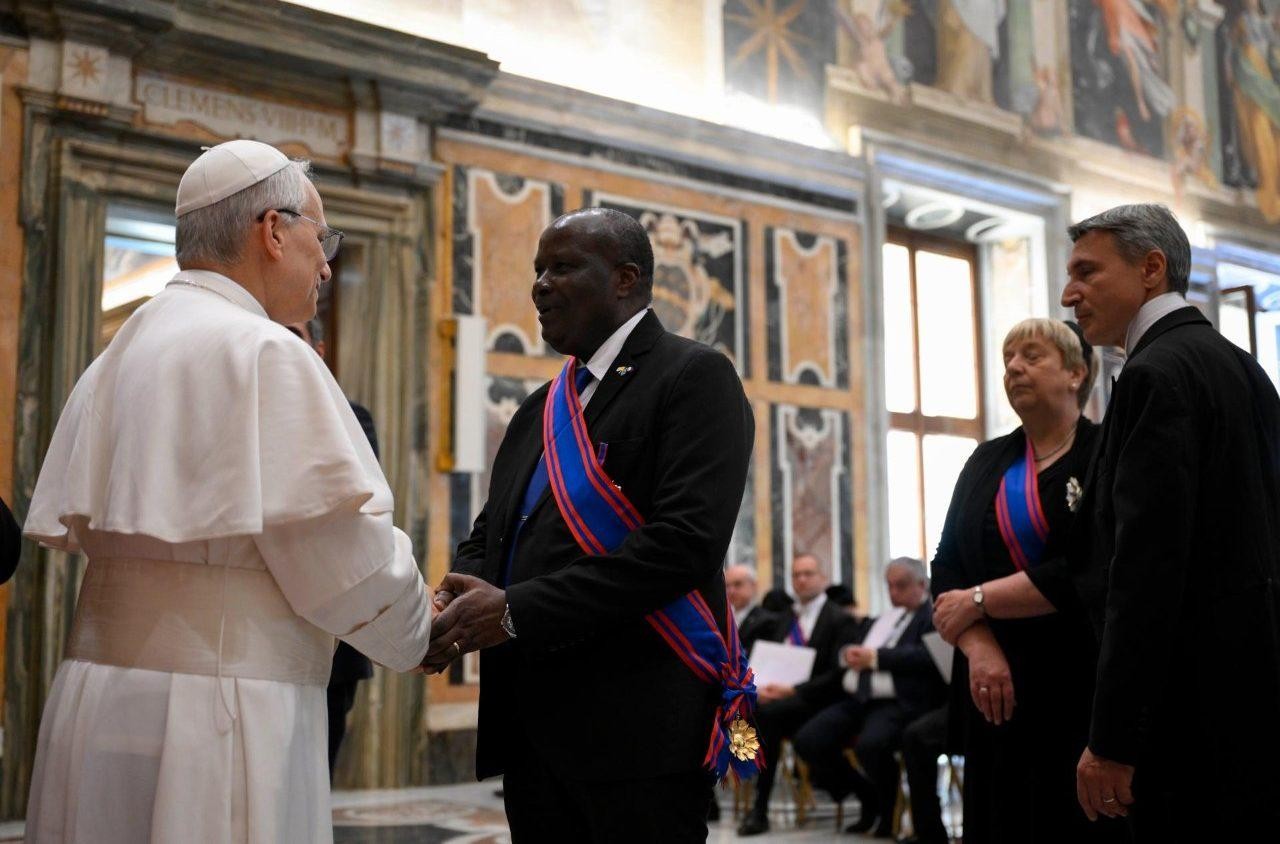
After the creation of State of Vatican City in 1929 following the Lateran Agreements with Italythe Holy See has consolidated its international presence. Today, he has diplomatic relations with more than 180 States and has a worldwide network of apostolic nuncios, equivalent to ambassadors.
This planetary presence is one of the main geopolitical assets of the Vatican. Few international actors have such a dense network, capable of gathering information and dialogue with governments, religious communities, NGOs and local people.
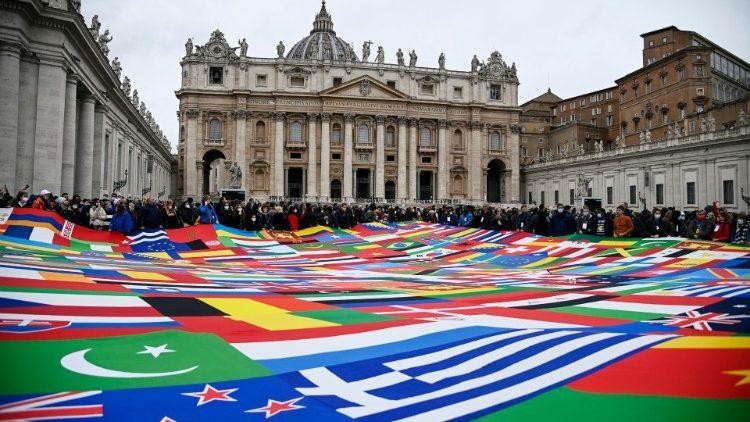
A power without an army but with global influence
The peculiarity of Vatican diplomacy lies in what specialists call the « moral power ».
Unlike the great powers that rely on military or economic force, the Holy See bases its influence on:
- mediation;
- moral credibility;
- Interreligious dialogue;
- defending human rights;
- the promotion of peace.
This diplomacy rarely seeks to impose. It favours listening, discretion and seeking compromise.
Cardinal Pietro Parolin, Secretary of State of the Holy See, recently summarized the vision of Pope Leo XIV as a « diplomacy of the meeting »based on justice, solidarity and peace.
The great diplomatic successes of the Vatican
Contemporary history is full of examples where the Vatican played a decisive role.
1. Mediation between Argentina and Chile
In the 1980s, the Holy See helped avoid a war between Argentina and Chile around the Beagle Canal dispute. This mediation is often considered one of the greatest diplomatic successes of the modern papacy.
2. The rapprochement between the United States and Cuba
Under Pope Francis' pontificate, the Vatican played an essential role in restoring diplomatic relations between the United States and Cuba in 2014.
The Presidents of the United States and Cuba themselves had recognized the importance of the discussions facilitated by the Holy See. This initiative is often presented as the Vatican's greatest diplomatic success in decades.
3. Dialogue in the Middle East
The Holy See has also repeatedly intervened as a discreet intermediary in the Middle East crises, promoting channels of dialogue between opposing parties when official relations were broken.
4. Combating conflict and migration
On migration, climate and humanitarian issues, the voice of the Vatican has become indispensable in international debates.
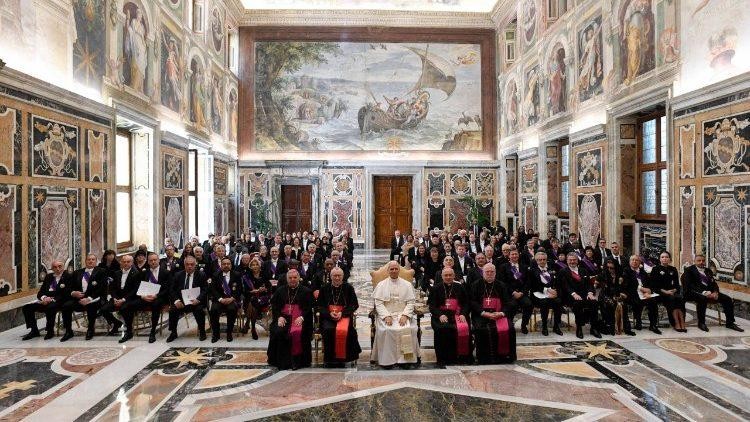
Pope Leo XIV and the modernization of Vatican diplomacy
The election of Pope Leo XIV takes place in a context marked by the war in Ukraine, Chinese-American tensions, migration crises, artificial intelligence and the increasing fragmentation of the international system.
From the first weeks of his pontificate, Leo XIV placed his diplomatic action under three principles:
- peace;
- Justice;
- the truth.
The new pope also stressed the need to revitalize multilateralism, dialogue among nations and international cooperation in an increasingly polarized world.
Recent interventions have also focused on:
- the protection of migrants;
- regulation of artificial intelligence;
- the fight against social divides;
- conflict prevention.
A silent revolution: the rise of women in Vatican governance
One of the most significant changes observed in recent years concerns the position of women in the administration of the Holy See.
Contrary to a common idea, women cannot become priests or popes in the Catholic Church. However, they now hold new administrative and strategic functions.
The most emblematic case is that of a sister Raffaella Petrini, became in 2025 the first woman to direct the governorate of Vatican Citya function equivalent to that of a Head of Government for the administration of the Pontifical State.
More significant, Pope Leo XIV has amended certain legal provisions in order to consolidate this evolution in a lasting way and allow non-cardinals to hold the highest administrative office in the Vatican.
In 2026, he also appointed Maria Montserrat Alvarado as head of the Dicastery in charge of communication, becoming the first lay woman to head a major department of the Holy Siège.
These decisions demonstrate a prudent but real desire for modernisation.
What vision of the new world order?
The world that is emerging today is marked by:
- the return of rivalries between great powers;
- the weakening of certain international institutions;
- the rise of nationalism;
- Challenges related to artificial intelligence;
- climate and migration crises.
Faced with these upheavals, Leo XIV seems to want to position the Vatican as a mediation power in a fragmented world.
Unlike certain powers that reason in terms of military or economic balance, the Holy See continues to promote a vision centred on:
- Dialogue;
- international cooperation;
- human dignity;
- respect for international law;
- the search for compromise.
In particular, the new pope denounced the growing polarization of societies and warned against what he described as a global spiritual, cultural and political crisis.
The Vatican, a diplomatic power of the 21st century
In an international system dominated by power relations, the Vatican remains an exception.
Its strength lies neither in weapons nor in the economy, but in its ability to speak to all actors, including those who no longer speak.
This discreet diplomacy, often conducted away from the cameras, has allowed the Holy See to maintain an influence that is not in common with its size.
Under Leo XIV, this tradition seems to continue, with particular attention to the new challenges of the twenty-first century: artificial intelligence, migration, geopolitical fractures and the crisis of multilateralism.
In an increasingly polarized world, the Vatican intends to continue to play a unique role: that of a global moral power capable of building bridges where others build walls.