

Article from Diplomatika magazine – N°03 : By Claudy Ahuka Lutundula
Cooperation between Africa and Europe is no longer based solely on relations between States. NGOs, communities, universities, businesses, diasporas and youth are increasingly involved in international partnerships. This contribution analyses the role of these actors in a more inclusive economic diplomacy based on skills transfer, digitalization and better territorial anchoring.
Economic diplomacy, long conceived as an exclusive prerogative of States and their administrations, is undergoing a profound recomposition. This article argues that sustainable cooperation between Africa and Europe is now based on a wider ecosystem of actors. — NGOs, local and regional authorities, universities, diasporas, young leaders, businesses and international organizations — of which the action complements or even supplements that of the traditional chancelleries.
Based on the analysis of institutional cooperation dynamics, development financing and digital inclusion, it shows how these non-state actors make economic diplomacy more horizontal, inclusive and anchored in the territories.
The thesis is as follows: African economic sovereignty, strengthening local skills and mobilizing the diaspora are the levers of a truly win-win partnership, in a context of growing multipolarity and increased competition between powers for access to the African continent. Before we look at these levers, we must first understand the geopolitical context in which the Africa-Europe relationship is today.
A geopolitical context in recomposition
The relationship between Africa and Europe is part of a long history, marked by colonization, independence and decades of development cooperation structured around public aid. This architecture has been gradually transformed by two converging dynamics.
The economic and demographic rise of the African continent, whose population is expected to exceed 2.5 billion by 2050, and the diversification of its international partners — China, Russia, Turkey, the Gulf countries and India have each strengthened their diplomatic and economic presence.
This multipolarity is not in itself a threat to the Africa-Europe relationship; However, it redefines its terms, giving African States an unprecedented negotiating capacity.
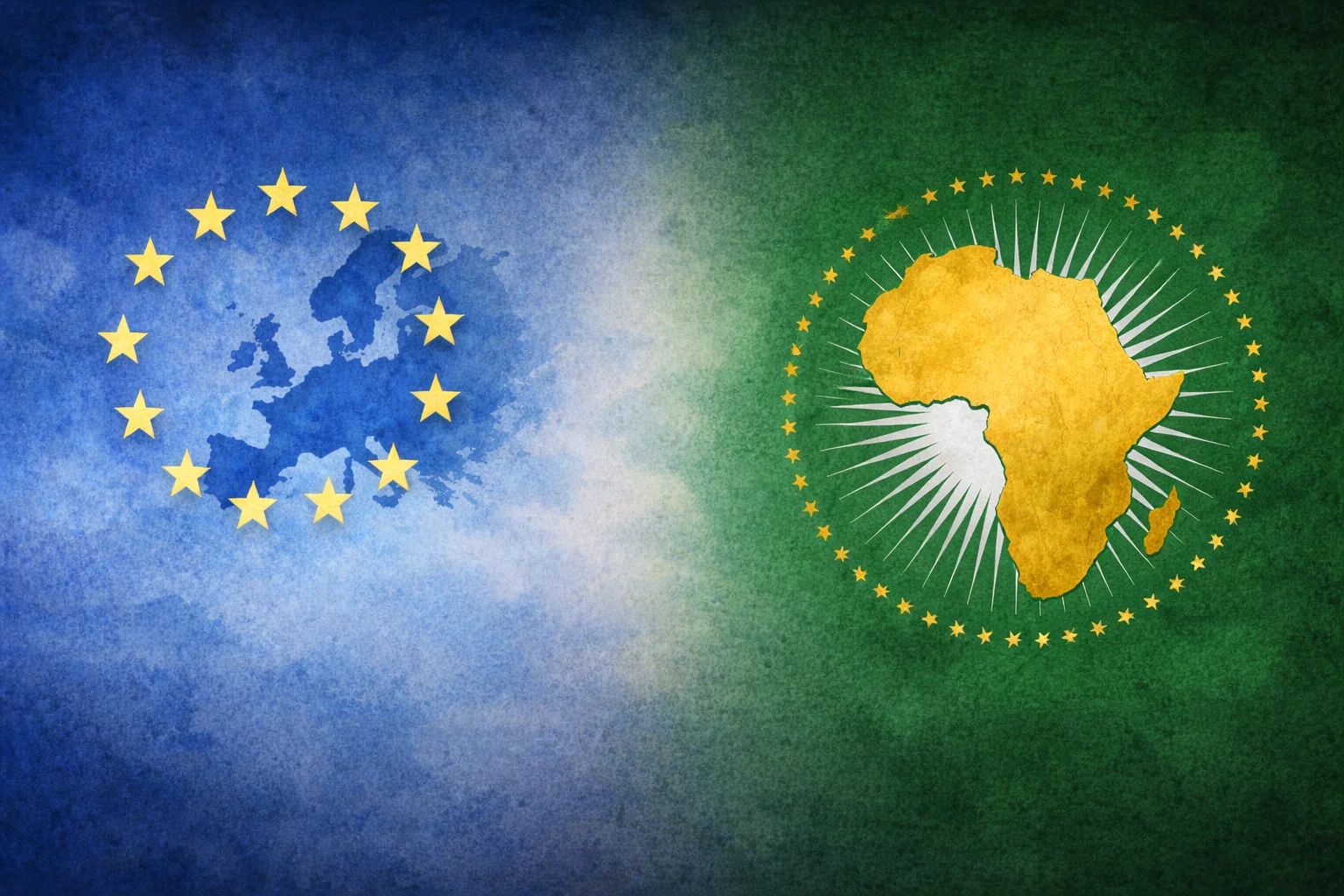
It is in this context that the European Union launched its Global Gateway strategy in 2021, which foresees EUR 300 billion in global investment by 2027, with the ambition to break with the traditional logic of aid for partnerships involving the private sector and local actors.
In mirror, the African Union affirms, through Agenda 2063 and the African Continental Free Trade Area which entered into force in 2021, a desire for endogenous regional integration and reduction of dependence on external aid — an ambition all the more necessary as the public debt of many African states has increased since the Covid-19 pandemic.
Between these two institutional architectures has opened a considerable space for non-state actors capable of building more flexible and legitimate links with the populations: it is precisely this space that the article proposes to explore.
Plural economic diplomacy
The classic triptych of economic diplomacy — Intergovernmental negotiations, bilateral or multilateral financing, implementation by national agencies — remains indispensable, but is increasingly insufficient in view of the speed of economic and digital transformation on the continent.
Non-governmental organizations specializing in international cooperation occupy a unique position in this regard: more agile than administrations, they set up projects in a few months rather than in several years, mobilize cross-financing and establish direct partnerships with local authorities, universities and African entrepreneurs.
The Franco-African organisations dedicated to digital inclusion clearly illustrate this role as a field operator, translating macro strategic orientations into concrete programmes rooted in local needs.
Together with NGOs, local authorities have also become professionalised: many French and European regions and municipalities have developed structured partnerships with African communities on water, sanitation, education and local economic development.
Their territorial anchoring ensures a better match between funded projects and the real needs of people, while building long-term relationships of trust that survive political alternations.
Universities play a complementary role: through their joint research programmes, double degrees and shared chairs, they directly enhance local technical and digital skills — a deficit identified by the United Nations Economic Commission for Africa as one of the main obstacles to the structural transformation of the economies of the continent.
Discover the entire article: https://diplomatika.net/cyberspace-war-influence-and-sovereignet-economic-en-african diplomacy/