
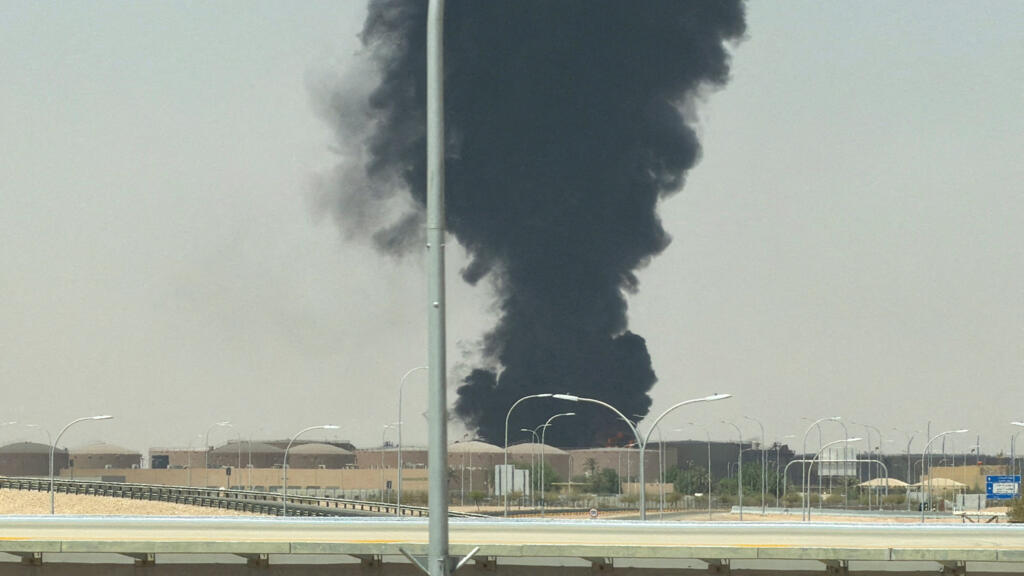
On 10 October 2026, a murderous attack claimed by the Yemeni Huthis rebels targeted King Khaled International Airport in Riyadh, Saudi Arabia. The assault, an unprecedented violence, caused numerous casualties and several hundred injured. Senegal, through its Ministry of African Integration, Foreign Affairs and External Senegalese, immediately condemned this act, expressing its solidarity with the Saudi people and government.
The war in Yemen, launched in 2014, pits the Iranian-backed Houthis rebels against an Arab coalition led by Saudi Arabia. This conflict has become the scene of a struggle of influence between Tehran and Riyadh, two regional powers with opposite views of the Islamic world.
Attacks on civilian infrastructure, such as Riyadh's, reflect a worrying escalation: they aim to weaken the stability of the kingdom and to test the resilience of its air defence.
Africa facing geopolitical repercussions
For Africa, this renewed tension in the Middle East is not without consequences. Energy security: Oil market volatility affects African economies dependent on fuel imports. Diplomatic relations: African countries, including Senegal, maintain close ties with Riyadh through Islamic cooperation and Saudi investment. Workers' mobility: Thousands of Africans employed in Saudi Arabia may be exposed to increased risks.
The Islamic world between solidarity and prudence
Riyadh's attack caused shock in the Muslim world. Some States expressed support for Saudi Arabia, while others called for restraint and mediation.
The Organization of Islamic Cooperation (OIC), based in Jeddah, is once again facing its role as a conciliator. This crisis revives the internal divides of the Islamic world: between majority Sunism and minority Shiism, between religious diplomacy and realpolitik.
Economic and religious consequences: Umra, Hajj and sacred tourism
Beyond geopolitics, conflict threatens a vital sector: the pilgrimage business. Every year millions of people visit Saudi Arabia for Umrah and Hajj. Security tensions could result in: A decrease in flights to Riyadh and Jeddah, an increase in insurance and transportation costs, a concern among African agencies specialized in pilgrimage.
Senegalese, Malian and Nigerian religious operators are already seeing increased caution. The stability of the kingdom is essential to ensure the continuity of these spiritual and economic activities.
Senegal, voice of peaceful diplomacy
By strongly condemning the attack, Senegal reaffirms its commitment to peace and Islamic solidarity. This position is part of a constant diplomatic tradition: a moderate Muslim country committed to regional stability and South-South cooperation.
The Ministry's official communiqué reflects a balanced stance: compassion for victims, rejection of violence, and call for collective responsibility.
The Houthia–Saudi Arabia War goes beyond the Gulf. It questions global security, the cohesion of the Islamic world and the stability of economic trade. For Africa, and particularly for Senegal, this crisis recalls the importance of proactive diplomacy, based on solidarity, mediation and the defence of peace values.