
While the peace agreement signed in 2018 between Ethiopia and Eritrea had given rise to hope for lasting reconciliation, military tensions had led to at resurface in the Horn of Africa. Fragile and unfinished, this peace threatens to erode, leaving the spectre of a new war with devastating humanitarian and regional consequences.
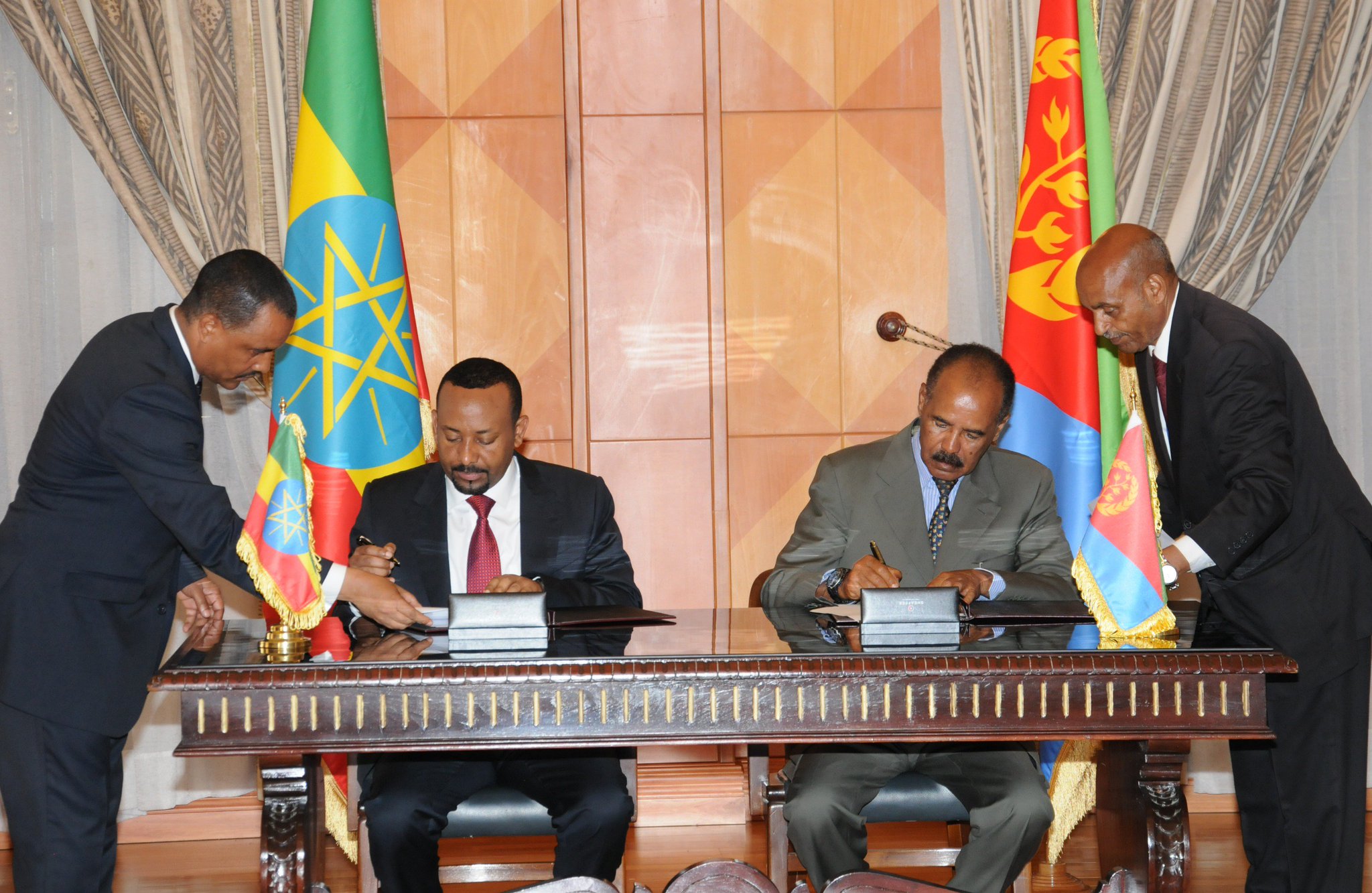
In July 2018, Ethiopia and Eritrea signed a peace agreement hailed throughout the world. After twenty years of war and border tensions, this initiative, led by Prime Minister Abiy Ahmed and President Isaias Afwerki, had fed hope for a new era of stability in the Horn of Africa. Yet eight years later, promises of reconciliation seemed to be compromised.
The scars of the Tigray conflict
The Tigray War (2020-2022) revived regional fractures. Eritrea, a military ally of Addis Ababa, deployed its troops alongside Ethiopian federal forces.
This direct involvement has exacerbated local grudges and further weakened trust among people. Evidence of human rights violations and mass displacements of civilians remind us that peace remains a distant horizon.
Disturbing militarization of borders
Today, the border areas between the two countries are being strongly militarised. The movement of troops, ethnic tensions and internal political rivalries in Ethiopia create an environment conducive to armed incidents. Observers fear that a spark will rekindle the fire of a regional conflict.
Regional geopolitical issues
The Horn of Africa is a strategic space, crossed by multiple rivalries: Djibouti, Somalia and Sudan observe with concern the evolution of relations between Addis Ababa and Asmara.
A resumption of hostilities would have a direct impact on trade routes, maritime security in the Red Sea and regional economic stability.
The spectre of a new humanitarian crisis
Beyond military and political issues, the civilian population remains the first victim. An open war would cause massive displacement, increase food insecurity and aggravate an already critical humanitarian situation. NGOs warn of the risk of a large-scale humanitarian catastrophe if the international community does not take preventive measures.
The analysis of Diallo Amadou
In his speech, the expert on International Relations Diallo Amadou recalled that the 2018 agreement did not resolve the root causes of the conflict. He stressed the importance of international mediation and stressed the need for strong cooperation mechanisms to avoid escalation. According to him, believing in lasting stability without real reconciliation is a dangerous illusion.
The peace between Ethiopia and Eritrea remains fragile, suspended from an unstable balance. The agreements of 2018 marked a symbolic step forward, but without political and social consolidation they risk remaining a dead letter.
The vigilance of the international community is essential in order to prevent the Horn of Africa from sinking into a cycle of violence whose people would pay a high price.