
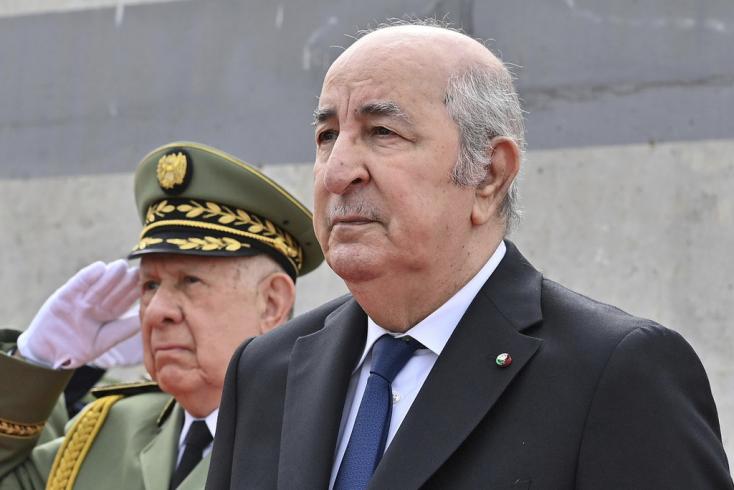
Algeria spent $25 billion on defence in 2026, or 20 per cent of its national budget. A first foreign nation to receive Russian stealth fighter Su-57, the second-largest military power on the African continent, Algiers shows a spectacular rise in power. Between real Sahelian threats, structural rivalry with Morocco and ambitions of regional leadership, deciphering a military strategy as legible in its reasons as questionable in its arbitrations.
While all the cameras in the world are poached at the chaotic security situation in Mali, at its southern borders, another regional actor continues to strengthen. Militaryly, Algeria seems stronger than ever. A palpable example of this rise in power, since the end of 2025 we can now see in the Algerian sky 2 fighter planes Su-57 « Felon » in the colours of the National People's Army (ANP). The acquisition of this aircraft of Russian origin is the result of a contract estimated at $2 billion for all for a total delivery of 14 aircraft, confirmed by the CEO of the Unified Aviation Construction Corporation (UAC), Vadim Badenkha. So Algiers became the first foreign country to receive this fifth generation stealth hunter, previously exclusively operated by Russia itself.
At the same time, Algiers has adopted a record defence budget of almost $25 billion for the year 2026, representing 20 per cent of the national budget and about 8 to 9 per cent of the country's GDP, a level rarely reached by an African State in peacetime.
In view of these impressive figures, analysts question: does this spectacular rise in power only respond to security threats at borders? Or does it hide broader geopolitical ambitions and, in the eyes of some neighbours, more suspicious?
WHAT IS ALGERIAN ARMAYED IN 2026?
According to Global Firepower 2026, Algeria ranks 27th out of 145 nations evaluated, Africa's 2nd largest military power behind Egypt, and the Arab world's 3rd behind Egypt and Saudi Arabia. It is ahead of Nigeria (33rd) and South Africa (40th) on the continent. This is not just a matter of figures: it is the result of a doctrine of continuous modernisation, initiated since the early 2000s but significantly accelerated after 2022.
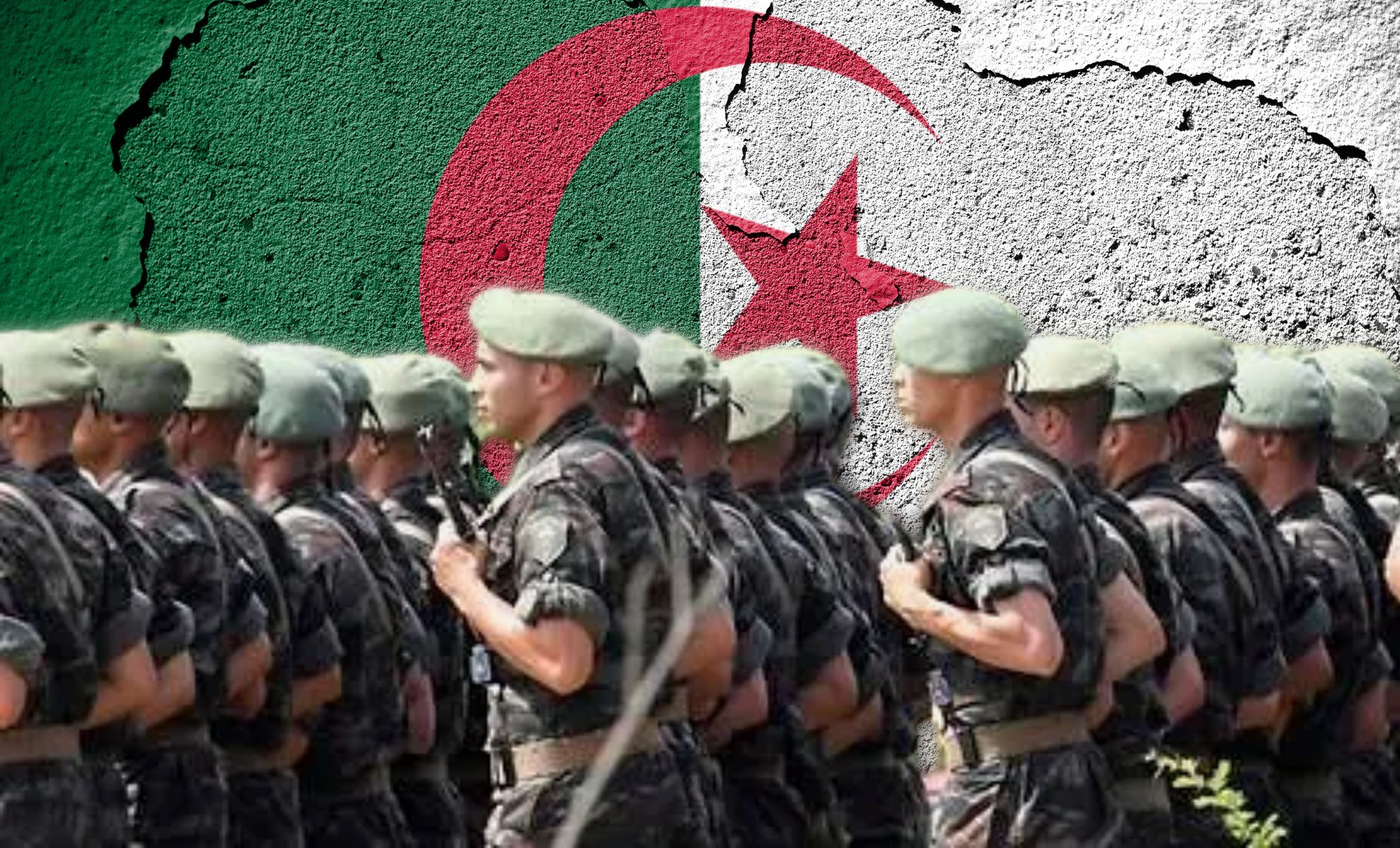
LANP now has an estimated 465 000 men (active, reservists and paramilitaries combined), an air fleet that includes Su-30 and Su-35, with now the first Su-57E received and other Su-34 being delivered according to the consistent information emanating from the Russian-Algerian logistics monitoring. On the air defence side, Algeria has acquired the Russian system S-400, one of the most feared in the world, as well as Tor-M2. On the drone side, ANP includes Chinese Wing Loong 2, comparable to American MQ-9 Reaper, and has ordered Turkish Anka S+. Its naval fleet also expanded: new frigates, submarines; Algeria invests its three strategic facades (land, air, sea).
xr:d:DAFlPrzc9fE:716,j:8181199162409551853,t:23112618
Anecdotal fact: with almost 8 to 9% of its GDP devoted to defence, Algeria is in a separate category. If she were a member of NATO, she would probably be in the right grace of Donald Trump, who keeps pushing the Otanian countries to reach the 2% required by the organisation's standards.. In fact, few do, the exercise is far from simple. Despite this Algiers shows more than four times this threshold, a zeal that does not fail to attract attention and sometimes concern from its neighbours.
The internal distribution of the budget is instructive: Of the 25 billion, about 13 billion go to the current operation of ANP (balances, training, housing), 6 billion to military equipment and their maintenance, and 5 billion to support logistics. Only one third, therefore, is directly linked to the purchase of weapons, which the Algerian authorities are urging to remind the critics.
From the aln to the anp: The army, the spine of the Algerian state
To understand the particular trajectory taken by this country, we must return to the very history of Algeria. The ANP was not born of a quiet institutional reform: it is the direct heir of the ALN, the National Liberation Army which carried the 1962 independence. This baptism of fire has established a special relationship between the military and the state that lasts until today. In Algeria, the army is not at the service of politics: it is the political, or at least the core of it.
This founding role survived the crises. The Black Decade (1991-2002) was the ultimate test: faced with the rise of GIA and GSPC, ANP led a fierce counter-insurgency that cost an estimated 100,000 to 200,000 civilian lives. The army emerged strengthened politically, convinced of its historic mission as guarantor of order and territorial integrity. The concept« Army-nation », often referred to in official speeches, is not hollow propaganda.
Today, Chief of Staff Said Chengriha is Deputy Minister of National Defence, a position that gives him unprecedented political visibility. The fact that the country's first budget line is controlled by a military, without public audit, speaks volumes about the nature of the Algerian regime and the real room for manoeuvre available to President Tebboune against the institution.
CHALLENGES: GETTING A TERRITORY-CONTINUING UNDER PRESSURE
Internal challenges
Militaryly governing 2.38 million km2, the equivalent of 5 times the French territory remains the first challenge of the ANP. Algeria shares more than 6,500 kilometres of land borders with seven countries, several of which are in open crisis: Mali, Libya Niger and to a lesser extent Sudan.
In the east, Haftar forces came dangerously close to the Algerian border. In the south, the withdrawal of French forces from the Sahel created a security vacuum that neither AES and its Russian ally were able to fill.
Internally, there are many challenges: le narcotrafic (the sahelo-maghrebin corridor is one of the most active in the world), large cross-border banditry, and residual terrorism that continues to agitate isolated areas of the South. In the face of intensified transnational threats, Sahelian wars and terrorist acts at the borders, Algeria has also devoted significant resources to its military intelligence capabilities. The development of human intelligence (HUMINT) and electronic intelligence (SIGINT) in border areas has become an operational priority as important as conventional armaments. Recently, the fulcruming attack by FLA and JNIM against the Malian Forces has served as a brutal reminder: without reliable information in real time, the 2 billion km2 of desert remains an impossible flaw to cover.
Defence industrialization also remains an unfinished project: Algeria still imports most of its heavy equipment, and experts recommend that at least $2 billion be allocated annually to the construction of a national defence industry.
External challenges
It can be said that rivalry with Morocco constitutes the ideological cement of Algerian military doctrine. Since the breakdown of diplomatic relations in 2021, the two countries have been looking at each other in faience dogs and at a steady pace. Researcher Intissar Fakir of the Middle East Institute in Washington said straight away in November 2025: neither country wants war, but both seem to be preparing for it.
This mistrust is not new: it plunges its roots into the 1963 Sands War, first armed confrontation between independent Algeria and Morocco, born of a border dispute around Tindouf and Béchar. Although brief, this war left a lasting scar in memory and shaped a bilateral relationship marked by suspicion and military competition.
The question of Western Sahara is the other apple of discord and Algeria is making every effort. Algiers has been the main political, diplomatic and material support of the Frente Polisario for fifty years. In addition to being an ideological posture inherited from the era of national liberation movements, this approach is also a conscious strategic lever. By financing and arming Polisario in the Tindouf camps, Algeria maintains permanent pressure on the southern flank of Morocco, neutralizing part of its military and diplomatic resources. The recognition by the United States of the Moroccan autonomy plan during the UN vote of November 2025 isolated Algiers on this issue, but without changing its position.
On the other hand, the Malian dossier adds an additional layer of geopolitical complexity. Algeria, a signatory to the Algiers Agreement of 2015, saw its role as a mediator swept away by the junta. The incident of the drone in 2025, an Algerian aircraft shot down or diverted to Malian territory according to the versions, ended up icing relations with Bamako, which regularly accuses Algiers of supporting the FLA.
The deep reasons for a rise in power
Several logics overlap to explain this trajectory, and they are inseparable.
The war in Ukraine is the main detonator. In fact, the Russian-Ukrainian conflict has been a revealing factor: the old Soviet arsenals have become a real problem. Algeria, whose army has long operated with Russian equipment of previous generations inherited from the USSR, learned from the images from Ukraine: T-72s destroyed by drones of a few thousand dollars, anti-aircraft defence systems overtaken by rogue ammunition, scrambled communications, unprotected tanks against portable anti-tank missiles. Since then, military equipment expenditure has been designed to modernize the entire arsenal to bring it into line with the standards of modern conventional warfare.
On the other hand, we can mention the response to the Morocco-Israel rapprochement. Since the Abraham Accords of 2020, Rabat and Tel Aviv have built a military partnership that deepens every year. In 2026, Morocco activated the Israeli air defence system Barak MX, capable of intercepting drones and cruise missiles for 150 kilometres. Israel Aerospace Industries has expanded its activities in Morocco in the most sensitive sectors: drones, surveillance, command. Rabat became the first United States military client in Africa, with over $8.5 billion in active contracts, and defence spending increased by 18 per cent between 2025 and 2026. Faced with what many in Algiers describe as a « Strategic circle »The Algerian response could not be purely diplomatic.
It should also be added that the Algerian authorities opt for a deliberately diversified portfolio of partners. Algeria refuses dependence on one block. Its military supply base includes Russia (S-400, Su-35, Su-57, Su-34, submarines), China (Wing Loong, corvettes), but also Germany (type 209 submarines), Italy (patrouilleurs), Turkey (anka drones) and India (increasing cooperation). This diversification is both pragmatic and political because it allows Algiers not to be neutralized by an embargo and to maintain its freedom of tone in international forums.
Military spending is also used to fuel the ambitions of Sahelian and Arab leadership. Algeria intends to impose itself. It claims the status of first-rate interlocutor for the security of the Sahel and aims to consolidate its position as the third military power in the Arab world. This position is being built both by diplomatic activism and by rapidly expanding deterrent capabilities.
ANP's main strategic partners
| Partner | Equipment / Cooperation |
| Russia | Su-57E, Su-35, Su-34, S-400, Tor-M2, submarines, missiles |
| China | Wing Loong 2 drones, corvettes, armoured vehicles |
| Germany | Submarine Type 209 |
| Italy | Naval patrols, technical cooperation |
| Turkey | Drones Anka S+ |
| India | Industrial cooperation |
The limits and blind angles of this strategy
History reminds us that no nation can forever put everything on strength without weakening its own foundations.
- First blind spot : budgetary sustainability. The Algerian government deficit exceeds 12% of GDP. In 2026, the state projected 137 billion expenditures for only 62 billion revenues. The difference is based on the oil rent, but with a Brent expected around $60, the margin is narrow. The IMF and the World Bank warn: domestic debt could quickly become a burden.
- Second blind angle : social arbitration. The defence budget alone exceeds that of Education (14.2 billion), Health (8 billion) and the Interior combined. Meanwhile, 15 per cent of young people are officially unemployed, drug shortages persist and opportunities are lacking. The money invested in the army does not create any diversified jobs or economic breath.
- Third blind angle : import dependence. Algeria remains dependent on its foreign suppliers for its heavy equipment. Embargoes, partner withdrawals or dinar fall are all threats. Budgetary opacity adds to concern: 13 billion in « general administration » No public details.
Finally, the tension with Morocco remains strong. Two neighbours without diplomatic relations, engaged in an arms race and opposed to Western Sahara: the border between deterrence and incident is thinner than ever.
Conclusion
Algeria does not militarize by caprice. It responds, with the means provided by the gas rent, to an objectively hostile regional environment: Sahelian neighbourhood in flames, structural rivalry with an increasingly integrated Morocco in Western and Israeli alliances, security vacuum in the South, multiple transnational threats, residual terrorism at borders. The rise in power of the ANP is initially defensive in its logic, even if it produces effects of an arms race difficult to control.
What questions more is the internal trajectory. A state that allocates 20% of its budget to defence at the expense of key social and economic sectors is taking a risky long-term bet. Military power can protect a territory; It does not create the jobs or infrastructure that a young population needs to avoid turning away from its own country.
For Algeria's African partners, the question is finally this: will Algeria armed to its teeth be a regional guarantor of stability, or an additional actor in a region that does not need new arms races? The answer belongs to both diplomats and generals.
SOURCES
[1] Mondafric — « Algiers, a 2026 budget adopted in opacity for the benefit of the army » — 12 October 2025. https://mondafrique.com
[2] TSA Algeria — « PLF 2026: Algeria's five largest budgets » — October 9, 2025. https://www.tsa-algerie.com
[3] The JDD — « Algeria: Tebboune adopts historic military budget of $25 billion for 2026 » — October 11, 2025. https://www.lejdd.fr
[4] Algeria 360 — « Defense: Algeria among the world's 30 most powerful armies in 2026 » — 28 January 2026. https://www.algerie360.com
[5] The Young Independent — « Global Firepower says: LANP a regional leader » — 27 January 2026. https://www.young-independent.net
[6] Military Zone (OPEX 360) — « New images confirm the presence of Russian 5th generation aircraft Su-57 in Algeria » — 23 February 2026. https://www.opex360.com
[7] Meta-Defense — « 167 cargo flights to Algeria in 2 months: has the delivery of Russian Su-57E and Su-35S started? » — 4 May 2026. https://meta-defence.fr
[8] Meta-Defense — « Rosoboronexport claims export contracts for Su-57E » — 20 April 2026. https://meta-defence.fr
[9] Maghreb Online — « Algeria, first country to receive stealth plane Su-57 » — November 18, 2025. https://www.moroccomail.fr
[10] Ecofin Agency — « Algeria: The purchase of 14 Su-57 stealth fighters from Russia will cost 2 billion $ ». https://www.agencecofin.com
[11] The 360.ma — « Morocco-Israel: details of major military cooperation projects » — 13 January 2026. https://en.le360.ma
[12] The 360.ma — « Morocco-Israel: A new military action plan to consolidate a strategic partnership in 2026 » — 6 January 2026. https://en.le360.ma
[13] Bladi.net — « Maghreb arms race: Algeria and Morocco transform North Africa into powderwood » — May 2026. https://www.bladi.net
[14] IsraelValley — « Algeria and Morocco. Israel is observing an unprecedented arms race » — 7 December 2024. https://israelvalley.com
[15] International Crisis Group — « Managing tensions between Algeria and Morocco » — Report 247, February 2025. https://www.crisisgroup.org
[16] International Crisis Group — « A diplomatic opening to Western Sahara » — Briefing 96, October 2025. https://www.crisisgroup.org
[17] The Conversation — « Western Sahara conflict: why Algeria supports the Polisario Front » — 8 July 2025. https://theconversation.com
[18] RTS — « After the UN vote on Western Sahara, Morocco exults, Algeria under pressure » — November 5, 2025. https://www.rts.ch
[19] Algeria Solidarity — « The national defence budget for the year 2026 is approaching $25 billion » — October 2025. https://algeriesolidaire.net
[20] New African / Africa Magazine — « Is Algeria's budget realistic? » — October 2025. https://magazinedelafrique.com
[21] Global Firepower — World Army Ranking 2026. https://www.globalfirepower.com
[22] SIPRI (Stockholm International Peace Research Institute) — Data on global military expenditures 2023-2025.