
We must recognize Senegal and, more broadly, many African states, an absolutely remarkable genius: we have managed to transform public administration into a strange mystical zone where everyone demands change... provided nothing really changes.
The citizen wants the breakup. The activist wants transformation. The columnist wants the refoundation. The expert wants governance. The technocrat wants stability. And the system annuitant wants his phone to keep ringing.
So goes the Republic.
Then comes a presidential decree. And suddenly, an institutional miracle: men who slept peacefully under air conditioning for fifteen years suddenly discovered the sacred virtues of democracy, counter-powers and administrative transparency.
Extraordinary civic awakening.
The decree acts as an alarm siren in the tight corridors of comfortable bureaucracies. A simple presidential signature is sometimes enough to cause more anxiety than 20 years of citizen debates.
Why?
Because basically, many people like politics as a spectacle, but hate politics as a real power reorganization.
We love conferences. We're celebrating the symposia. Multiplying « Strategic panels » in air-conditioned hotels. We're going to write about « emergence », the « resilience », « inclusivity », « Systemic innovation » and other words sufficiently abstract to disturb anyone absolutely.
But when a decree actually threatens an administrative rent, then the Republic immediately enters an intellectual alert.
Editorialists become constitutionalists. The beneficiaries of the system become philosophers of the rule of law. Opportunists become resistant. And the silencers of yesterday suddenly become intractable guardians of republican principles.
As Montesquieu wrote:
« It is an eternal experience that every man who has power is inclined to abuse. »
Curiously, this quotation is often mobilized only when power changes hands. When it served certain established interests, philosophical silence was much more comfortable.
For it must be said clearly: in our post-colonial states, part of the administration has sometimes ended up developing a kind of parallel monarchy. A modern bureaucratic nobility.
National directions transformed into hereditary territories. Agencies become autonomous principalities. Public posts defended with more ardour than a national border. Administrative networks where one enters less by skill than by relational genealogy.
And in the meantime, the people looked at this opaque mechanics with the fatalism of those to whom it was learned that the state is an inaccessible mountain.
Then comes a power that begins to sign. Reorganize. Merge. Delete. Name. Control. Audit.
And there, general panic.
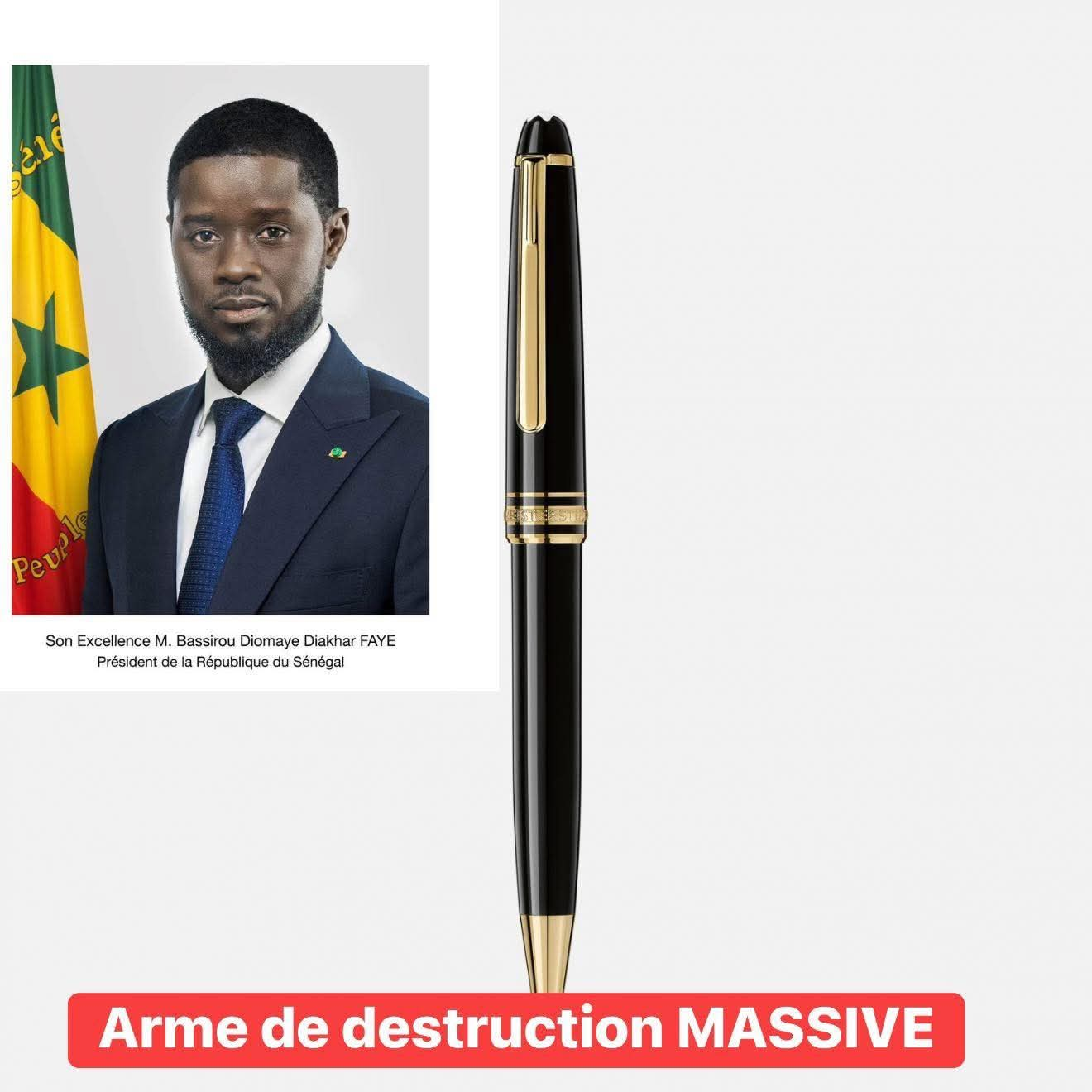
The presidential decree then becomes this « weapons of mass destruction » not against democracy as some professionals like to repeat selective indignation — but against accumulated comforts.
The pen becomes more dangerous than a meeting.
Because the meeting produces emotions. The decree produces consequences.
That's all the difference.
As Charles de Gaulle cynically said:
« The most expensive, most ruinous policy is to be small.. »
Many African administrative systems have specialized in a strange strategic smallness: multiplication of unnecessary structures, bureaucratic inflation, institutional overlaps, agencies with no real impact, redundant directions and procedures designed to slow down rather than produce.
The administration then becomes a huge shadow theatre where everyone plays the role of efficiency while the citizen expects results that never happen.
In this universe, the decree is a deflagration.
It recalls an unbearable truth for some: the state is not supposed to be a secondary residence for tired administrative elites. It is an instrument of national transformation.
That is why some decrees cause so much stress. They do not only move people; They move invisible balances.
They touch:
- networks of influence;
- discreet clienteles;
- habits of power;
- opaque circuits;
- standardized privileges;
- areas of bureaucratic comfort carefully protected.
And as always, the defenders of the status quo drape in universal principles as soon as their interests become threatened.
Aimé Césaire had perfectly summarized:
« A civilization that proves to be incapable of solving the problems caused by its functioning is a decadent civilization.. »
Our African administrations sometimes suffer precisely from this functional decadence: many procedures, few results; a lot of institutional prestige, little efficiency; a lot of Republican ceremonial, little concrete impact on people's lives.
The presidential decree, when used as an instrument for real reform, disrupts this comfortable inertia.
And that's where irony becomes tasty.
Those who claimed yesterday « a strong State » suddenly discover the dangers of authority as soon as it touches their interests. Those who denounced administrative slowness suddenly became defenders of endless procedures. Those who spoke of national sovereignty panic as soon as a power really tries to regain strategic control of certain structures.
The truth is simple: many want a powerful state... But only when it protects their privileges.
The rest is often nothing more than rhetorical dressing.
But be careful: the irony of history works in both directions.
For the decree can also become a dangerous temptation when it becomes a tool for excessive personalization of power. An administration cannot function sustainably only through presidential impulses. Reform without method becomes agitation. Unweighted verticality always produces its own drifts.
As Hannah Arendt wrote:
« Power corresponds to man's ability to act in a concerted manner. »
In other words, governing is not just about signing; It is also necessary to build institutions capable of surviving men.
This is the real historical challenge of contemporary Senegal. Transform without brutalizing. Reform without improvising. Discipline without choking. Reorganize without producing a new bureaucracy of courtiers.
But one thing is certain: African peoples are gradually entering a new political era. They no longer content themselves with the sovereignist slogans recited with emphasis on television sets. They expect tangible results.
And in this silent battle for the real transformation of states, it happens that a simple black and gold pen shakes more than an entire army of communicators.
Because deep down, what the installed systems fear most is not popular anger.
This is the exact moment when power stops talking... And start signing.
Alioune Ndiaye
International Development Expert
Writer
Officer, Ministry of Employment and FPT
Individual professor at the UCAD FST