
Africa's development in the twenty-first century cannot be understood independently of the profound changes that are reshaping the international order. Long perceived as a peripheral space of power rivalries, the continent is now an indispensable player in global geopolitical recompositions. Its strategic position, the abundance of its natural resources, the dynamism of its population, the growth of its markets and its growing weight in multilateral forums reinforce its attractiveness to both traditional and emerging powers.
By Amadou Diallo
Specialist in International Relations
However, this new centrality is accompanied by an international environment marked by increased competition among States, fragmentation of global governance, persistent security crises and accelerated energy, digital and climate transitions. These dynamics are both opportunities for economic transformation and vulnerabilities that can affect the continent's development trajectories.
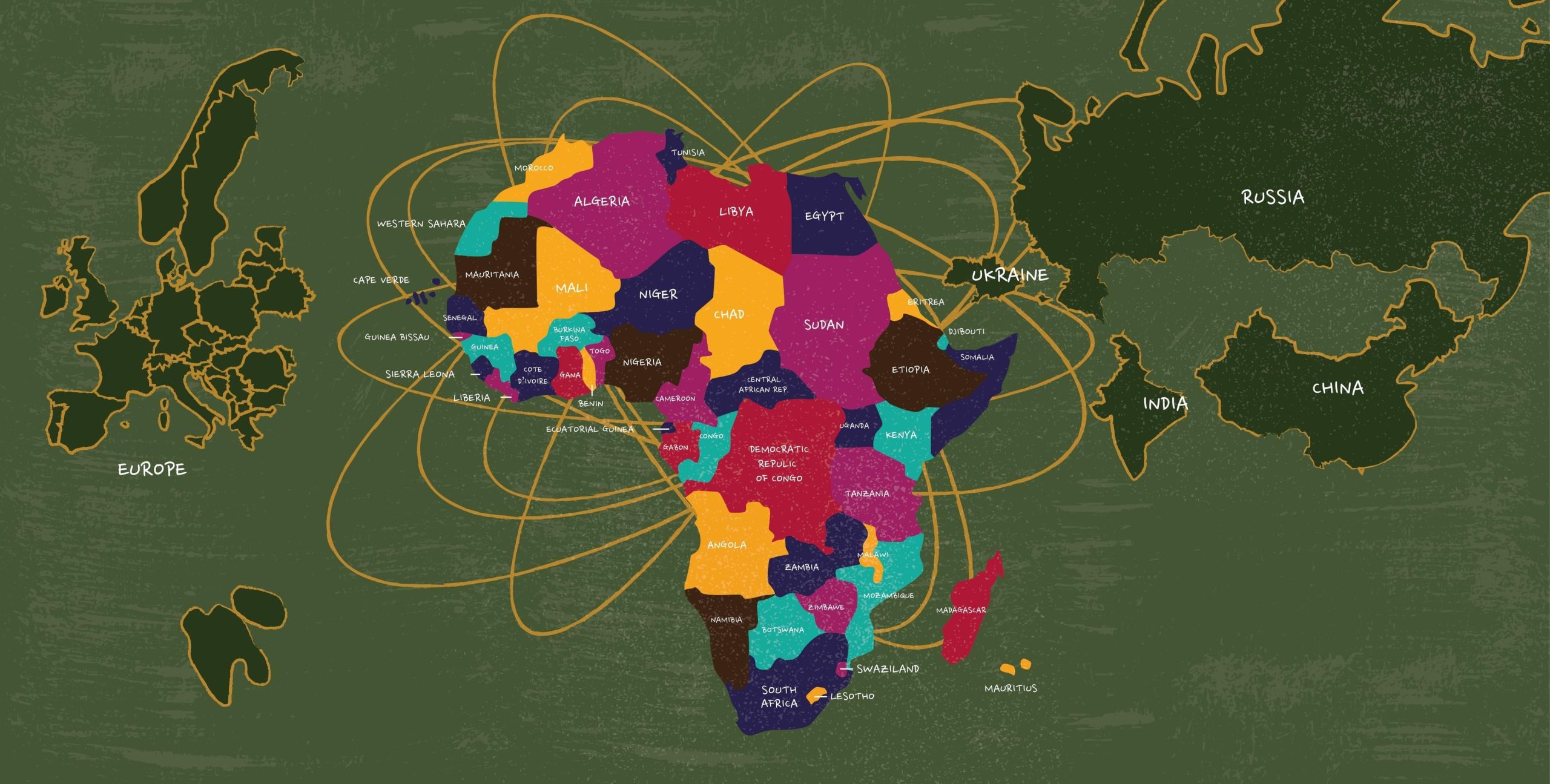
Major geopolitical trends include: the emergence of a more multipolar international order. The growing influence of powers such as China, India, Türkiye, the Gulf countries and Russia is changing the traditional balance of cooperation in Africa.
The Chinese-African relationship illustrates this dynamic: the trade volume between China and Africa reached a record level in 2024, and Beijing has remained the continent's leading trading partner for more than a decade, while gradually redirecting its funding to more targeted projects with greater local impact rather than to the 2010's mega-infrastructure projects.
At the same time, in the Sahel, the breakdown of the AES States (Mali, Burkina Faso, Niger) with their traditional Western partners and their rapprochement with Russia, particularly in the security field and, more recently, civilian nuclear; evidence of how this diversification of partnerships is reshaping regional power relations in practice. This diversification provides new diplomatic and economic opportunities for African States, but also requires increased capacity to defend their strategic interests in order to avoid any form of dependency, whether old or new.
At the same time, security remains an essential determinant of development. The expansion of armed groups, terrorism, transnational organized crime, illicit trafficking and the fragility of certain border areas undermine investment, disrupt trade and increase population displacement. The case of Sahelian space is emblematic in this respect:
the persistence of terrorist attacks, the end of previous multilateral arrangements (Operation Barkhane, MINUSMA, G5 Sahel) and the increasing militarization of governance in the three countries of the AES Confederation illustrate how security instability can divert national resources from their development objectives, including in strategic areas such as mining, where several major deposits are located precisely in areas of active conflict.
Security stability is no longer just a political requirement; It is a prerequisite for economic growth, regional integration and the achievement of sustainable development goals.
To these challenges is added the rise of economic diplomacy. In a context of global competition for access to strategic resources, markets and logistics corridors, African States are called upon to develop diplomacy capable of attracting productive investment, promoting local commodity transformation and strengthening regional value chains.
The implementation of the African Continental Free Trade Area (AFTAAf) illustrates this desire to make economic integration a lever of sovereignty and shared prosperity: it now brings together about 50 states for a market of more than 1.3 billion consumers, aims at the elimination of 90 per cent of intra-African customs duties and has adopted accompanying mechanisms which is a pan-African system of payment in local currencies, adjustment funds, green industrialization initiative.
Intra-African trade is increasing (about $220 billion in 2024, a net annual increase), but remain constrained by persistent structural obstacles: cost of transport, limited access to commercial financing, infrastructure deficit and fragmentation of payment systems linked to the coexistence of more than 40 national currencies.
This tension between the political ambition of integration and the slow pace of its operational translation, with some experts referring to a « Advanced but still incomplete integration »recalls that African economic diplomacy is played as much in the negotiation of agreements as in their effective implementation by administrations and companies.
Finally, digital and climate transitions gradually redefine the continent's strategic priorities. Artificial intelligence, cybersecurity, digitalization of administrations, sustainable management of natural resources and adaptation to the effects of climate change are now major geopolitical issues. They will condition the competitiveness of African economies, their resilience to crises and their ability to play a more influential role in global governance.
For this reason, the major geopolitical trends in Africa call for an exclusively security or economic reading of development. They require an integrated approach in which diplomacy, governance, security, innovation and international cooperation converge towards the same objective. ; build sustainable, sovereign and inclusive development for African people.