
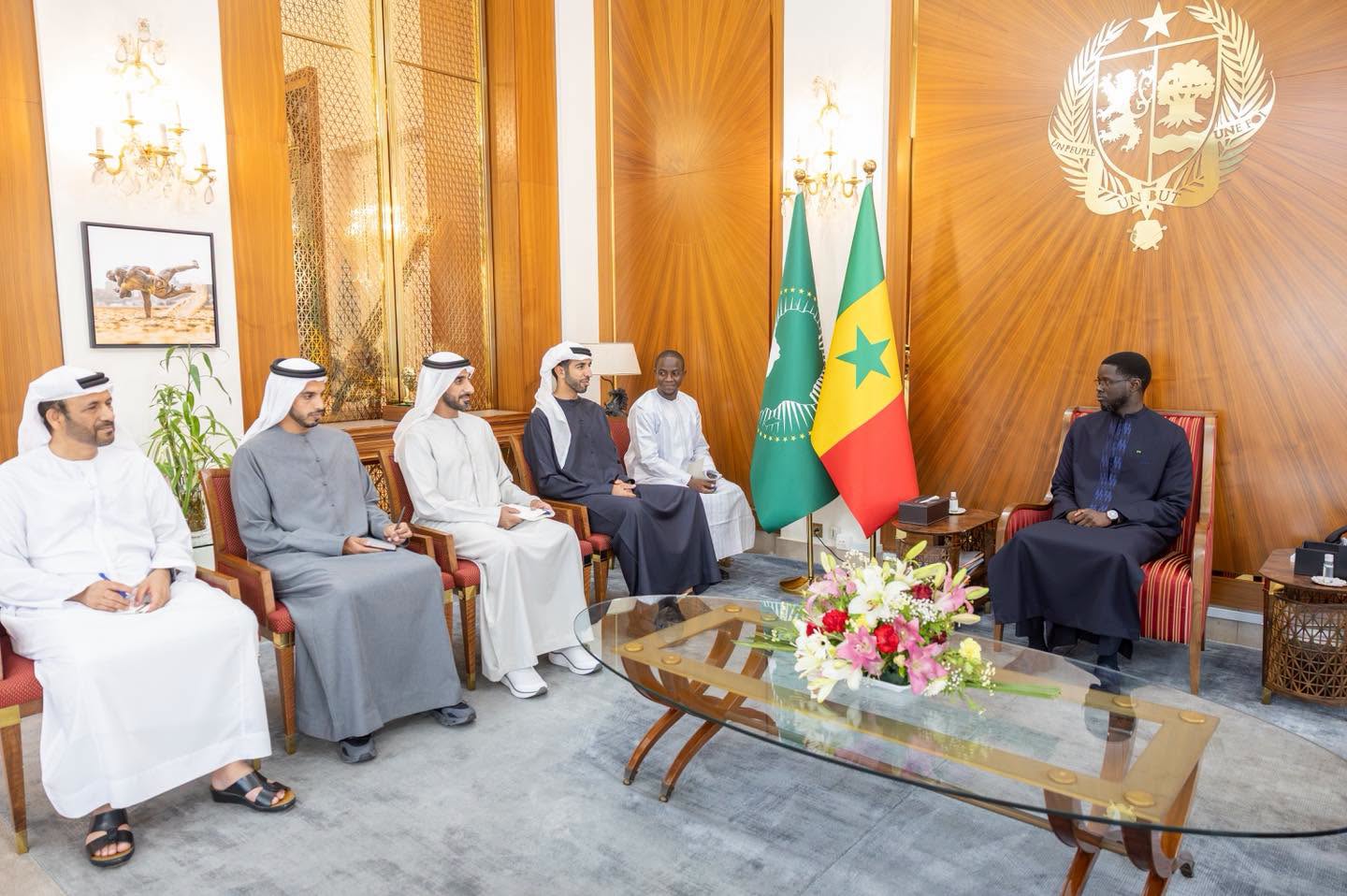
For a long time, the international presence in Africa was summed up in a competition between the former colonial powers, the United States, China or, more recently, Russia. Yet another force was imposed with remarkable discretion: the Gulf monarchies.
From the skyscrapers of Dubai to the palaces of Riyadh, Abu Dhabi in Doha, the Gulf capitals now look to Africa as a strategic space of investment, security and influence. Ports, mines, agriculture, renewable energy, artificial intelligence, logistics, infrastructure, finance: no sector seems to escape their interest.
This rise in power reflects a profound transformation of global economic diplomacy.
Africa, a partner that has become strategic
Why this growing interest in Africa?
The answer lies in several factors. With more 1.5 billion inhabitants Africa is the largest reservoir of population growth in the world, with a population expected to double by 2050. It also has natural resources essential for the energy transition: cobalt, lithium, copper, manganese, graphite or rare earth.
To this are added more than 13 million hectares Unexploited arable land, an exceptional solar power potential and a geographical position that controls many of the world's major maritime routes.
For the Gulf States, whose economies remain largely dependent on hydrocarbons, Africa is both a future market, a source of food security and a key partner in economic diversification through their major national strategies, such as: Vision 2030 in Saudi Arabia or the transformation plans of the United Arab Emirates.
Portfolio diplomacy
Contrary to the more ideological or military approaches observed elsewhere, the Gulf countries favour investment-based diplomacy.
The United Arab Emirates is now among the first foreign investors on the continent. DP World operates or develops port and logistics infrastructure in several African countries (e.g. the construction of the Port of Ndayane in Senegal), while Masdar invest in renewable energy. Emirati sovereign wealth funds increase equity participation in the telecommunications, health and infrastructure sectors.
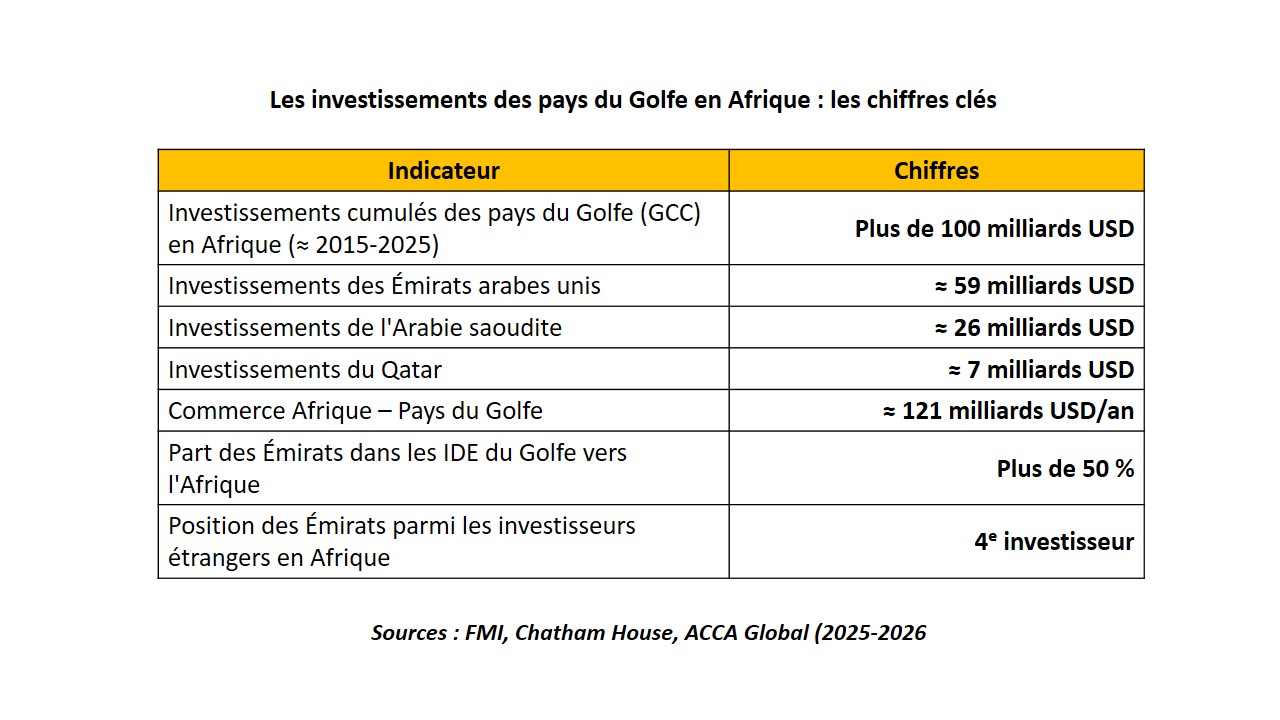
Saudi Arabia is also accelerating its presence through its Public Investment Fund (PIF), which funds energy, transport, mining and agriculture projects.
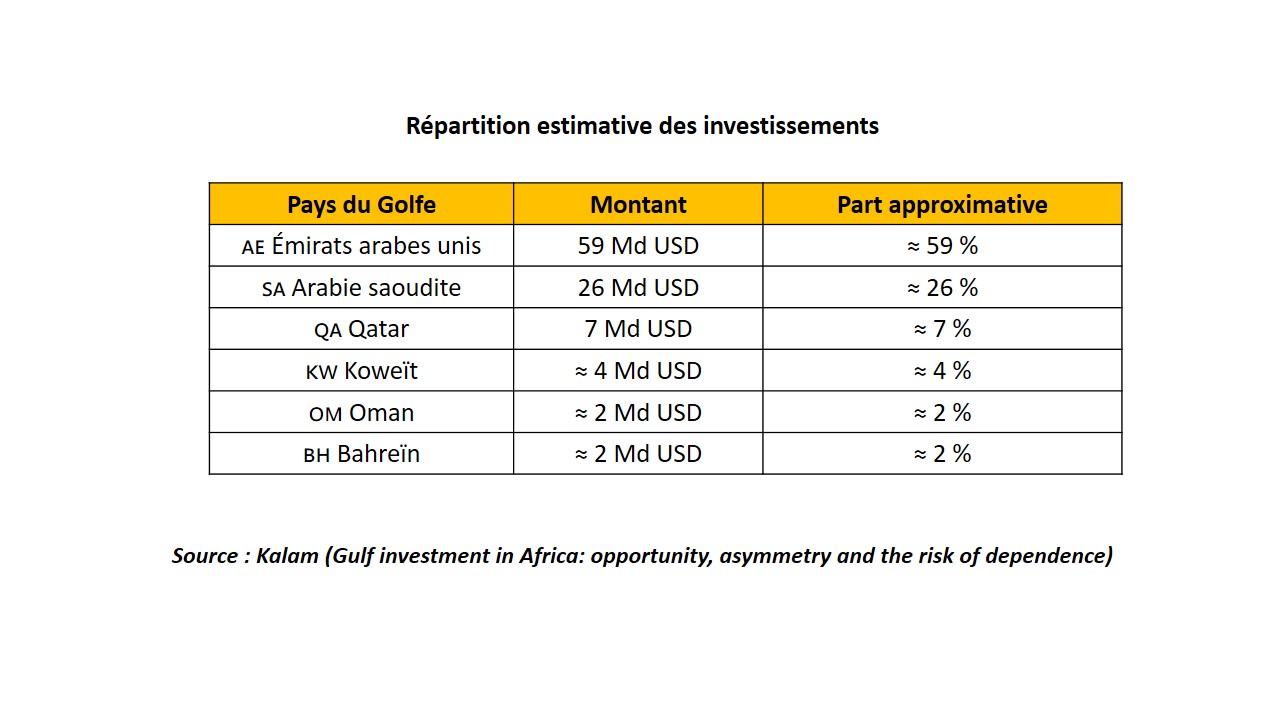
Qatar is pursuing a more focused strategy, combining investment, diplomatic mediation, air transport and educational cooperation. Qatar Airways gradually strengthens its presence on the continent, while Doha asserts itself as a dialogue player in several regional crises.
Ports, a new geopolitical weapon
One of the most strategic dimensions of this offensive concerns port infrastructure.
From the port of Dakar to those of Berbera, Doraleh, Maputo or Luanda, the Gulf operators invest massively in African logistics platforms.
The objective goes far beyond maritime trade.
Controlling ports means securing supply chains, supporting energy exports, supporting trade between Asia, the Middle East and Africa and strengthening its influence in the major maritime corridors linking the Red Sea, the Gulf of Aden, the Indian Ocean and the Atlantic.
In a context where nearly 90 per cent of world trade is transiting by sea, these investments take on a highly strategic dimension.
A new global competition
The arrival of the Gulf countries comes as Africa becomes one of the main areas of geopolitical competition.
China continues to develop its infrastructure within the framework of New Silk Roads. The United States is seeking to secure access toCritical mineralss. European Union Global Gateway programme, while Turkey, India and South Korea are also strengthening their presence.
In this increasingly competitive landscape, the Gulf monarchies have an advantage: they are often perceived as pragmatic partners, focusing on economic projects and business relations rather than political conditionalities.
This approach seduces many African governments, seeking to diversify their partnerships and reduce their dependence on a limited number of powers.
Senegal in the Gulf radar
Senegal does not escape this dynamic.
Thanks to its political stability, its geographical position, its oil and gas discoveries, as well as its ambitions in infrastructure and digital technology, the country is attracting increasing interest from Gulf investors.
Energy, real estate, port infrastructure, Islamic finance, high-end tourism and data centres offer important opportunities for cooperation.
To this is added the opportunities created by the African Continental Free Trade Area (AFTAAF), which strengthens Senegal's attractiveness as a gateway to the West African market.
Partnerships to build with discernment
This rise of the Gulf countries is a real opportunity for Africa. Investment contributes to financing essential infrastructure, job creation and technology transfer.
But these partnerships also raise several issues.
How to ensure that projects respond national development priorities ? How preserve transparency in contracts and ensure a fair distribution of profits? How to avoid strategic infrastructure becoming levers of economic dependence or political influence ?
For African states, the challenge is not to choose between the United States, China, Europe or the Gulf countries. Rather, it involves building balanced partnerships based on mutual interests, local value creation and national capacity-building.
Diplomacy of Opportunities
Africa is no longer just a field of international rivalries; It becomes a coveted partner in the recomposition of the world economy.
The Gulf monarchies understood it well. By focusing on investments, logistics, energy, technology and finance, they seek to record their influence over time.
For African countries, this news opens a window of opportunity. Provided that we negotiate with clarity, demand transparent partnerships and place people's interests at the heart of cooperation strategies.
The future of relations between Africa and the Gulf will not only depend on the amount of investment announced. It will depend on the ability of both regions to build an alliance based on trust, innovation and a shared vision of sustainable development. In a world where geopolitical balances are rapidly reshaping, this relationship could become one of the most structuring axes of 21st century economic diplomacy.