
The growing attraction between Africa and the monarchies of the Arabian peninsula is no longer to be demonstrated. In a few years, the United Arab Emirates, Saudi Arabia and Qatar have grown to one of the continent's most visible partners. Their financial mastodons invest heavily in logistics networks, food security, energy transition and extractive industries.
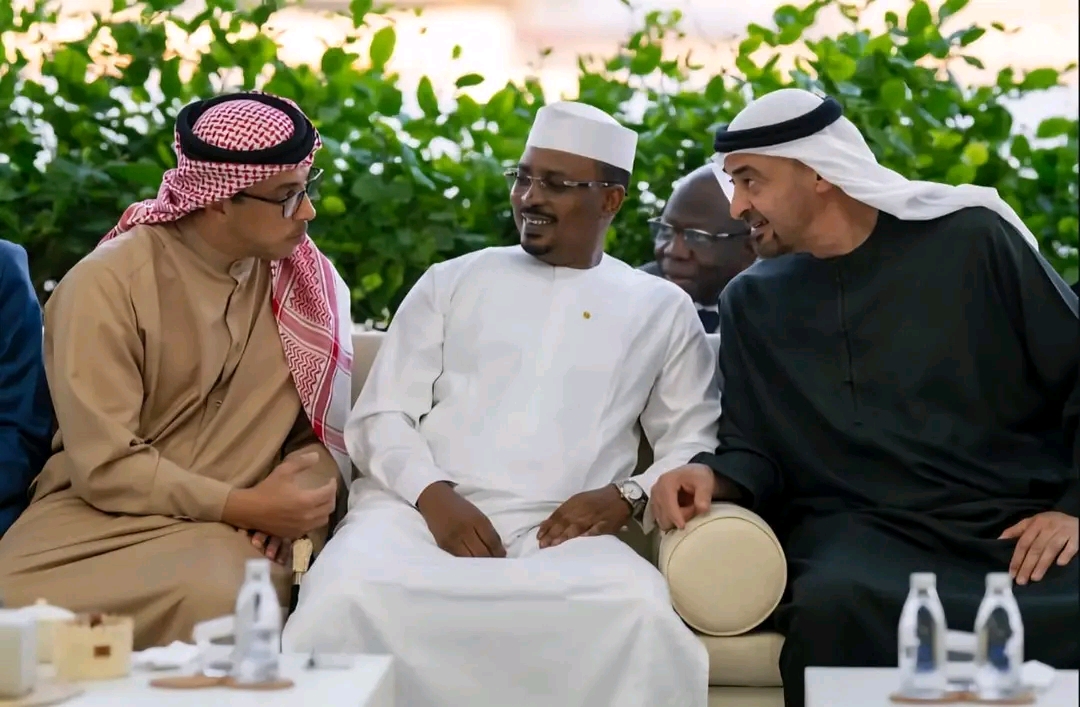
Chad is actively participating in this movement. The recent displacements of the Head of State to Abu Dhabi and Riyadh illustrate this desire to diversify alliances in an increasingly competitive international space.
Yet, behind the figures and the signatures of contracts, a fundamental aspect of this transition remains in the shadow: that of political and intercultural communication. In the international arena, the success of negotiations rarely depends solely on economic interests. It is based, as the work on Geert Hofstede's cultural distance modeled, on the ability of a state to shape a story, inspire trust and reduce cultural distance with its partners.. This is precisely where one of the most unique assets of N的Djamena lies.
State bilingualism, underexploited strategic capital
Chad has a specificity often perceived from an administrative or internal perspective only: its official French-Arab bilingualism.
As part of the diplomatic offensive towards the Gulf, this linguistic duality is changing in nature. It becomes a negotiating resource. Mastering Arabic enables Chadian decision makers to establish direct dialogue, man to man, without cold and sometimes approximate intermediation of third-party translators.
But the stakes go beyond mere technical convenience. According to intercultural negotiation analysts, speaking his partner's language is a mark of cultural consideration and a powerful reducer of psychological distance. In diplomacy, based on the principle of Paul Grice, language defuses implicit misunderstandings and creates an informal common ground, conducive to strategic decisions.
This bilingualism offers Chad a rare flexibility. It allows the country to navigate simultaneously in the French-speaking networks and in the Arab-Muslim space, building a hybrid and particularly agile diplomatic identity.
The N-axis Djamena-Riyadh-Abu Dhabi, translating understanding into major projects
As the theories of international political economy founded by Susan Strange recall, modern economic diplomacy does not feed on declarations of intent; it requires tangible results. For Chad, the strategic use of its relationship levers has resulted in a particularly dense bilateral agenda in recent months.
In this dynamic, the N-Djamena-Riyadh axis accelerated significantly. After the Chadian President's presence at the Extraordinary Arab-Islamic Summit in November 2024, and then exchanges on behalf of the Umra in March 2025, it was during his pilgrimage in May 2026 that the relationship took a very political turn. His bilateral meeting with Crown Prince Mohammed bin Salmane (MBS) in Mina helped to consolidate capital commitments.
Beyond the symbol, these discussions resulted in structuring investments: Funding for a Cardiology Centre at the Renaissance Hospital in N.
The approach is similar to Abu Dhabi, which has become a leading partner in the country's development. The presidential visits of April and November 2025, the latter devoted to the promotion of the National Development Plan « Chad Connection 2030 », found their extension during a ten-day official stay in July 2026.
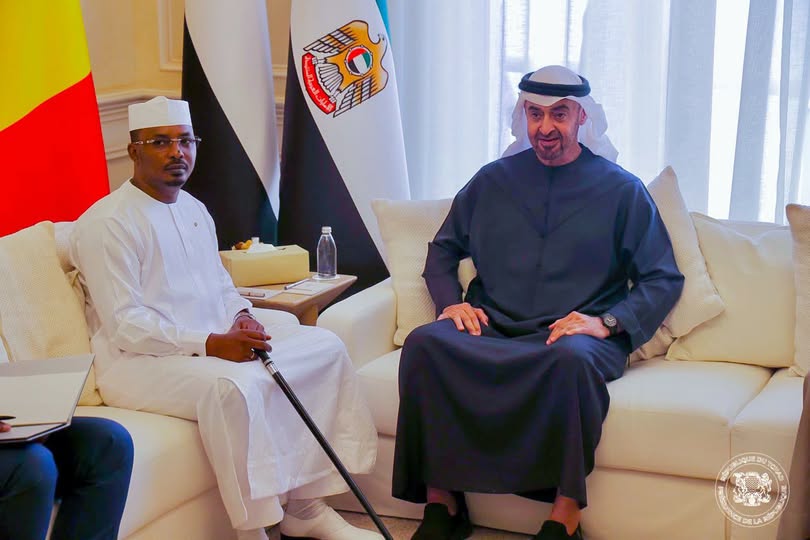
The two face-to-face interviews with Sheikh Mohamed bin Zayed al Nahyan allowed to seal the Emirati support to vital sectors. This commitment is being realized today through the deployment of mobile hospitals in the east of the country precisely in Amdjarass and Abéché, the construction of a modern hospital complex in the capital, grants for higher education and direct participation in the Djarmaya photovoltaic plant project at the northern exit of the capital.
In both directions, the fact that Chadian negotiators share common cultural and linguistic codes with their Gulf counterparts is not a protocol detail. This is a silent but formidable selling argument in the face of competition from other capital-seeking states.
Rethinking Branding Nation Chad
Public diplomacy is based on what Simon Anholt calls the Branding Nation : the art of managing a country's overall reputation to attract talent and capital. For Chad, the stake is high. Too often summarized internationally by its security or humanitarian challenges, the country is trying to rewrite its history. The message it now carries is that of a crossroads of opportunities, with its natural resources and its pivotal geographical position..
Official bilingualism plays a central role in this rewriting of the national brand image. By positioning itself as a natural bridge between sub-Saharan Africa, the French-speaking world and the Arab-Islamic space, Chad demonstrates its ability to serve as a regional interpreter and stabilizer. For Gulf investors, this dual culture is an essential reinsurance factor before investing long-term capital.
The foundations of Soft power Chad
As Joseph Nye pointed out, the influence of a nation does not depend solely on its military strength or financial power. She also resides in its ability to attract, share values and build lasting relationships.
For Chad, this soft power is based on a memory shared with the Sahelo-Saharan space and the Arab world, nourished by centuries of trans-Saharan trade, confessional affinities and historical linguistic anchor. These intangible links fluidize administrative relations and speed up decision-making with the Middle East's major sovereign wealth funds. They allow Chad to be a respected strategic partner, not just an aid seeker.
Valorizing the intangible, the new border of African attractiveness
In the end, the rapprochement between Chad and the Gulf powers shows that language and culture are not mere legacy of the past. These are contemporary geopolitical tools of first order.
By coherently linking French and Arabic in its external action, Chad not only diversifys its financial support but also redefines the rules of its international attractiveness.
In a global economy where trust and reputation are, to take up Francis Fukuyama's thesis, highly strategic assets for economic development, valuing its cultural capital becomes a necessity to exist. The recent course of Chadian diplomacy calls on the States of the continent to rethink their intangible resources not as identity curiosities but as genuine instruments of sovereignty and negotiation.
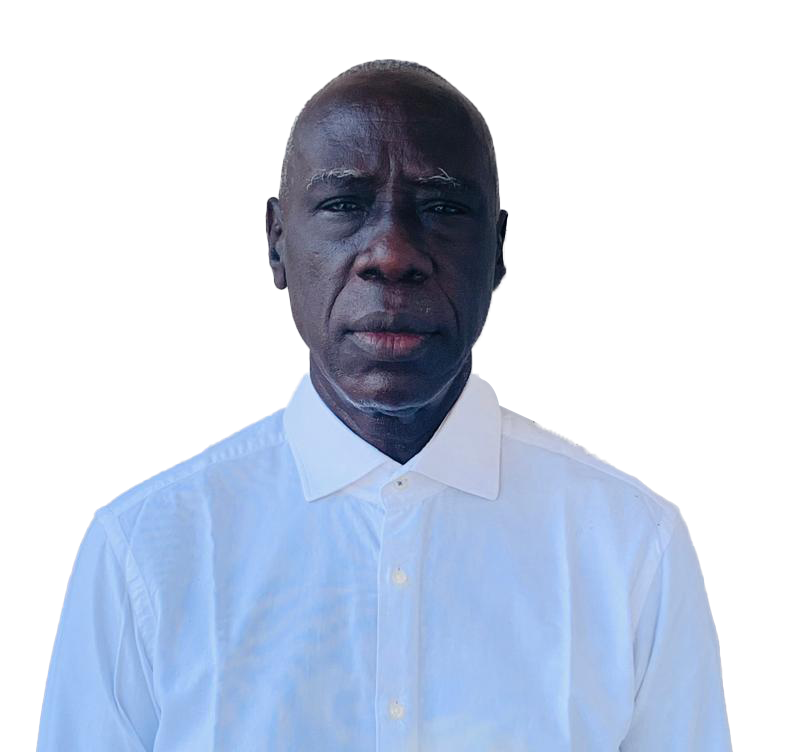
Mustapha Abakar Mallumi
Research Teacher – Specialist in Strategic Communication and Public Governance
Author – Consultant in Public Policy and International Relations