
5 questions to understand everything
It's a small earthquake in the automotive world. On May 25, 2026, Ferrari unveiled in Rome the « Luce » (« light » in Italian) its very first 100% electric car: 1,050 horsepower, 530 km of autonomy, five seats, and a minimum bill of 550 000 euros. The chaffed horse mark, which had long sworn never to yield to electric, was tilted in front of the world's inevitable dynamic. This symbolic shift says something essential about the ecological transition: it is a reality that no one can avoid. It imposes itself on industrial icons as well as on states, luxury brands and continents. And at the heart of this recomposition of global power relations, Africa finds itself in a position as strategic as it is uncomfortable, indispensable for the transition, but still too often reduced to the role of supplier of its own wealth.
Why has Africa become a strategic space for the global ecological transition?
To understand why Africa has become a leading geopolitical space in global environmental competition, just look at what's in its basement. The continent concentrates some of the most sought after minerals in the world. Congolese cobalt, Zambian copper, Gabonese manganese or Malian lithium now fuel the global race for electric batteries.
The numbers speak for themselves. The DRC dominated the global supply of cobalt in 2024, with its main mines together accounting for more than 50% of global production. The African continent holds about 30 per cent of the world's reserves of these minerals that are essential to the realization of the energy transition. And the pressure will only increase: by 2050, the world's demand for lithium, cobalt and nickel needed to manufacture electric car components like the Ferrari luce could increase by 75 in comparison with 2020 levels. To address this, industry may need about 80 new copper mines, 70 new lithium and nickel mines each, and 30 new cobalt mines by 2030.
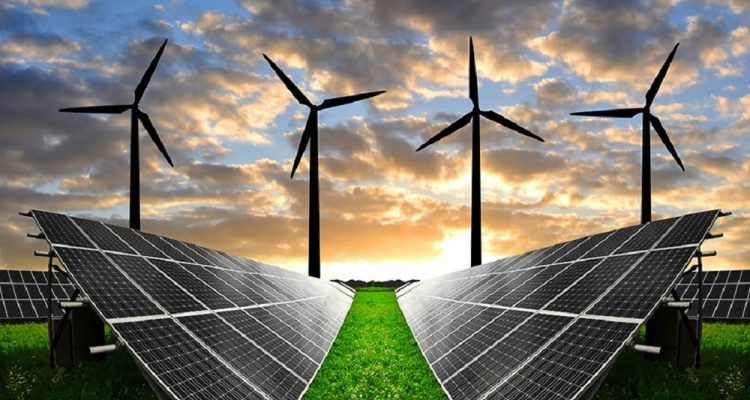
This mining potential adds considerable energy potential. Solar installations in Africa increased by 54 per cent in 2025, notably by South Africa, Nigeria, Egypt and Algeria. This dynamic could improve access to electricity for the approximately 600 million Africans who are still deprived of it.
Beyond the social issue, the energy issue is above all an issue of economic development. No sustainable industrialization can be based on limited, expensive or irregular access to electricity. Plants, data centres, transport networks, mining or agri-food processing activities: all depend on abundant and stable energy.
In many African countries, however, a significant proportion of the population continues to rely on firewood, charcoal or other traditional fuels to meet their daily energy needs. This situation limits productivity, increases production costs and hinders the emergence of industries capable of processing raw materials locally.
The energy transition therefore represents more than a climate target for Africa. It is one of the conditions necessary to develop local value chains, reduce dependence on industrial imports and create more wealth on the continent. Without reliable and accessible energy, economic transformation ambitions may remain largely theoretical.
As a result, Africa provides much of the minerals needed for the global energy transition. Yet there is no guarantee that this new rush will really benefit the continent. The risk is to review the same pattern: exporting raw resources while value and industry develop elsewhere.
Is the ecological transition an opportunity for economic sovereignty for Africa?
Is the global ecological transition finally opening a window for Africa to break with its structural position as a simple supplier of raw materials? The signals are encouraging, provided African States seize it with ambition.
The African Development Bank Index of Industrialization in Africa 2025 provides a nuanced but generally positive picture. The continent's manufacturing value added increased from $285 billion in 2020 to $351 billion in 2025. Forty-one in 54 countries improved their industrial score between 2010 and 2024. Morocco, for the first time, surpasses South Africa and imposes itself as the continent's first industrial economy, thanks to deliberate diversification in automobiles and aeronautics.
The key lies in two factors: secure mining areas and local processing. Exporting raw minerals means leaving value added to the processing countries. Thanks to a first step in the value chain, Kinshasa's processed cobalt exports reached $6 billion in 2022, compared with only $167 million previously. The DRC is developing refining capacity to convert cobalt hydroxide into higher-value metal cobalt, and its temporary bans on cobalt exports in 2025 helped stabilize world prices. It is an unprecedented gesture of power for an African producing country.
In parallel, the African Continental Free Trade Area (AFTAAf) is another central lever. Its full implementation could lead to a 48 per cent increase in intra-African trade in manufacturing by 2045.
But there is still a long way to go, as intra-African trade currently accounts for only 14.4% of the continental total, compared with 60% in Asia and 57% in Europe.
Does Africa risk reproducing a new form of green dependency?
While the transition can be an opportunity, it also carries a well-known structural risk: to reproduce, in a new form, the logics of dependency that have structured relations between Africa and the world since the colonial era.
The first risk is technological. China currently dominates 80 per cent of the global solar panel supply chain. In Africa, Chinese solar panel imports jumped by 48 per cent in 2025, from 12.7 GW to 18.8 GW. A dependency of a new type emerges, less visible than oil imports, but just as structuring. China combines its economic presence in Africa with the export of its solar panels, partnerships that enable it to access mining and agricultural resources at preferential rates.
The second risk concerns African oil economies. Countries such as Nigeria, Angola, Gabon and Congo-Brazzaville derive a major part of their income from fossil rents, an income that is threatened by global decarbonization with progressive obsolescence. IIA 2025 is unambiguous: most of these states have stagnant industrial scores. Oil rent did not make these countries strong; It has often weakened them politically and institutionally.
The third alarm signal comes from Brussels. The EU's Carbon Border Adjustment Mechanism (CBM) is perceived by many African states as a protectionist barrier that could curb their emerging industrial exports. For Sébastien Treyer, Director of IDDRI (Institute for Sustainable Development and International Relations) « co-build with these states the technical design of this mechanism, to prove to them that we are not trying to exclude them from our markets ».
What are the geopolitical trade-offs between major powers on the African continent?
Africa has become a geopolitical terrain where the great powers are fighting for the future of the global transition. This competition has accelerated considerably as a result of an upset international context, whose crisis in the Strait of Ormuz is the most recent and edifying event.
Since the outbreak of the conflict involving Iran, the Ormuz Strait, separating Iran from Oman, has been blocked, closing a key road for petroleum products. According to the International Energy Agency, 20 to 25 per cent of the world's oil transport, 20 per cent of liquefied gas and 80 per cent of oil destined for Asia transit through this route. The Brent, a global reference used to fix the price of crude oil, has re-edged the bar of 102 dollars a barrel after the American announcement to block Iranian ports, and the price of oil has increased by more than 10% since Donald Trump announced an extension of the ceasefire with Tehran. The outbreak recalls that fossil dependence remains a factor of global vulnerability. For Europe, this crisis reveals that replacing Russian oil with Gulf crude oil after 2022 simply meant trading one dependency for another. An observation which, paradoxically, should reinforce the argument for an accelerated energy transition, and which gives strategic value to African minerals for green technologies.
It is in this context of global tensions that competition for African resources is taking place. China has taken a considerable lead: its companies control a major share of mining in the DRC, Zambia and Zimbabwe. In the electric car, BYD is in the lead for pure electric vehicles with 2.26 million sold in 2025, compared to 1.64 million for Tesla, a dominant position that relies directly on access to African minerals.
The United States has attempted to counter-attack via the Lobitoa railway project linking Angola, the DRC and Zambia. Often presented as the Western response to Chinese omnipresence in the African mining sector, the project mobilizes more than $2.7 billion in investment. The first transport of cobalt via this corridor was carried out in May 2026, with reduced deadlines from 45 days to 45 hours for certain exports. But Washington marks the step: « the United States is no longer in the table, at least at the moment », recognizes the EU Ambassador in Angola. Europe remains committed but insufficiently funded to weigh sustainably against Beijing.
Can Africa impose its own vision of ecological transition?
This question is perhaps the most political of all: can Africa cease to be the object of the global transition to become a sovereign subject, capable of imposing its own terms and rhythms?
There are encouraging signs. The DRC imposed bans on cobalt exports in 2025, an unprecedented act of power for an African producing country. Morocco rose to the leading continental industrial position. Senegal, Côte d'Ivoire and Ethiopia are making progress in the rankings by diversifying their economies. These examples prove that economic sovereignty is not inaccessible. Countries that are making progress in this direction are generally those that invest in time and have clear policy choices.
But structural obstacles remain considerable. Africa contributes less than 4% of global CO2 emissions, but supports some of the most severe effects of climate change. This asymmetry is a powerful moral and political argument for demanding massive financing and real technology transfers. The cost of financing solar projects in Africa remains three to four times higher than in Europe, a cruel paradox for the brightest continent in the world.
As Sébastien Treyer points out, the countries of the South « They rightly denounce the unfulfilled promises of international solidarity made by the countries of the North, which, in their view, are the essential condition for the success of the environmental agenda. ». The position of strategic non-alignment that African states are multiplying, refusing to choose between Washington, Beijing and Brussels to better negotiate with each other, is a renewed form of Bandung's spirit. They are actors who now have the means to make their voices heard.
True green sovereignty will depend on the continent's ability to deal with its own resources, mobilize its own capital and demand equal partnerships, ceasing to choose between yesterday's extraction logics and tomorrow's new technological dependencies.
Conclusion
The global ecological transition is also a geopolitical transition, and its tremors, from the Strait of Ormuz to the mines of Katanga, from Shenzhen factories to the ports of Lobito, draw a map of the world in full recomposition. The question is no longer just what resources Africa owns, but what it intends to do with it. The continent can remain a supplier of raw materials or gradually impose itself in the value chains that will shape tomorrow's economy.
What is still missing is the ability to speak with one voice, to transform before exporting, and to demand a level playing field in an international system that still too often leans against the most vulnerable. Light exists. It remains to be decided who is holding the switch.