
Bouah Tossedoue
In less than 48 hours, an unprecedented coalition between jihadists and Tuareg rebels has inflicted on the Malian army and its Russian allies their most devastating defeat in years. A military earthquake with geopolitical repercussions far beyond the borders of Mali.
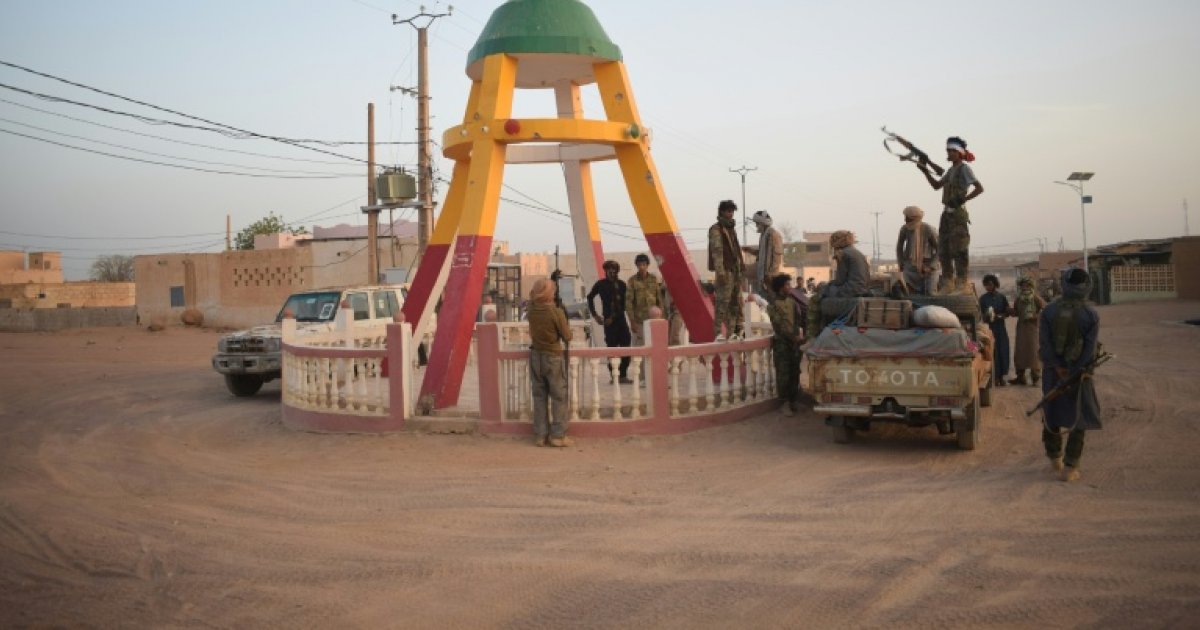
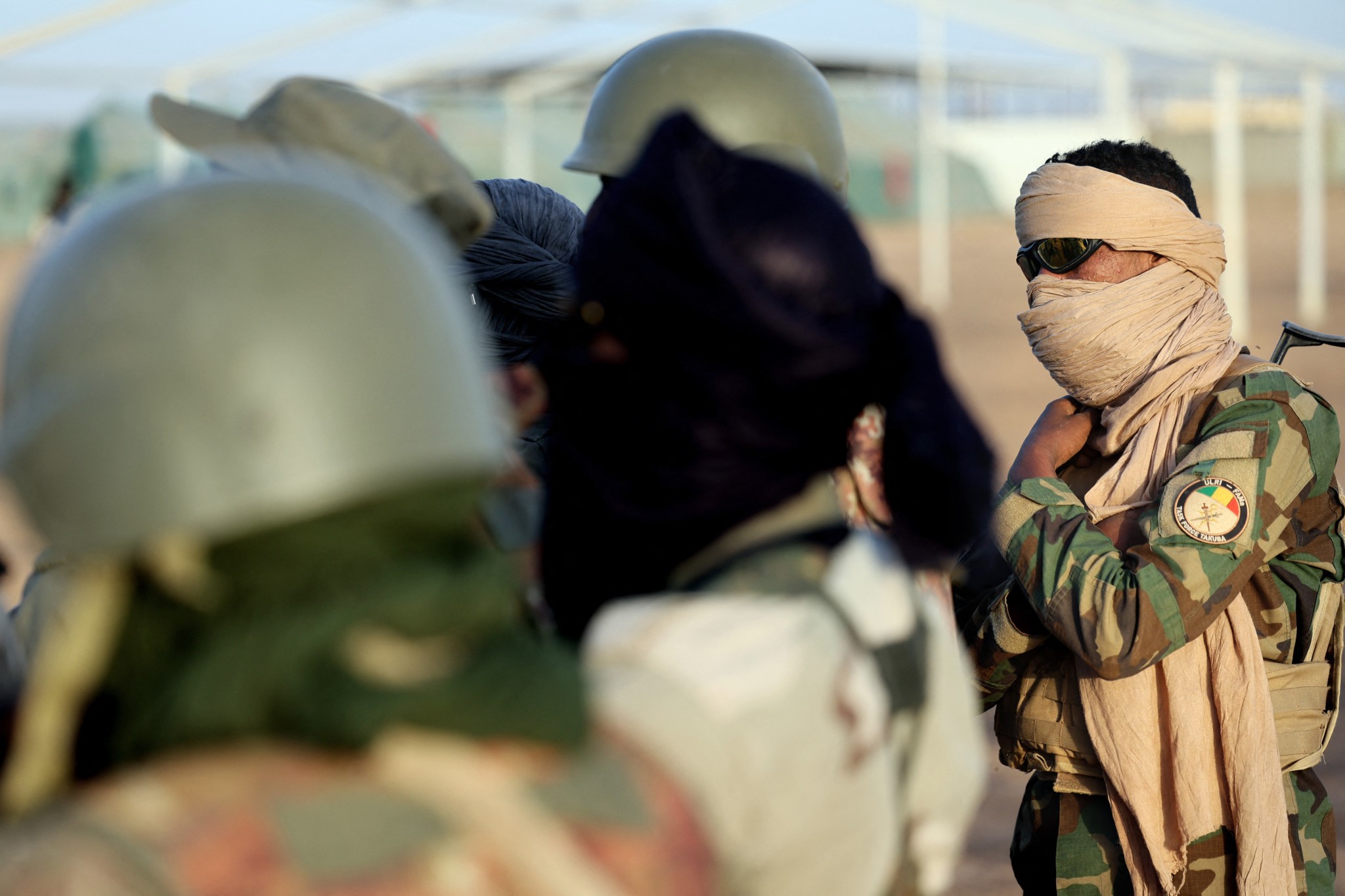
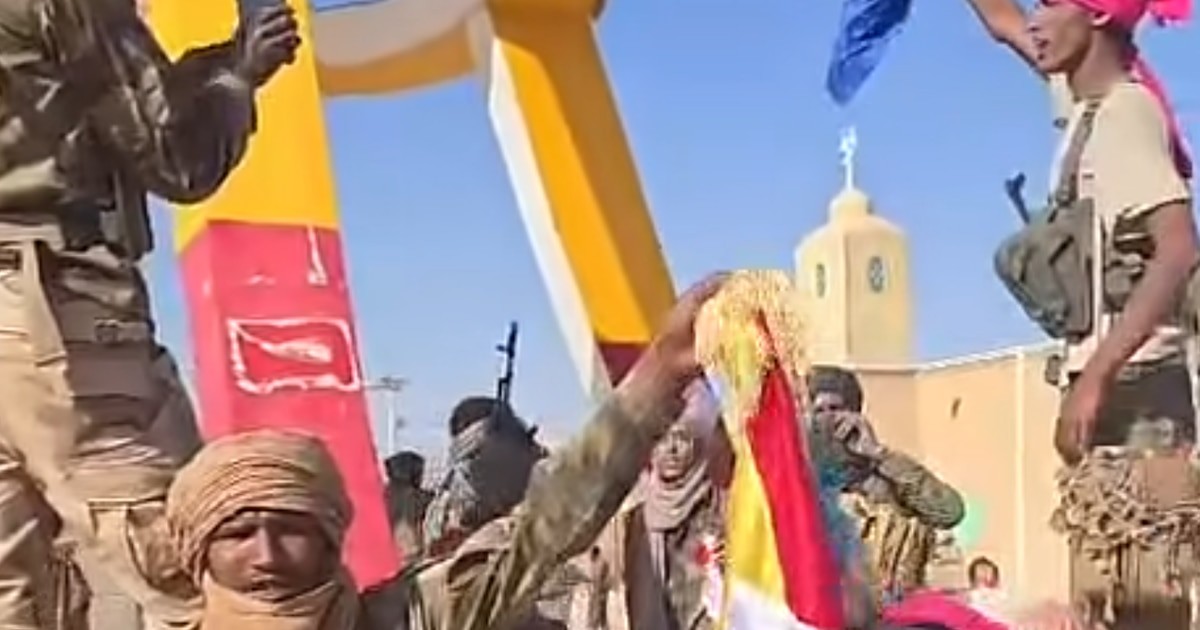
28 April 2026. The flag of the Azawad floats again on Kidal. Only three years after its reconquest by the Malian Armed Forces, supported by the former militia Wagner, renamed Africa Corps, the fighters of the Azawad Liberation Front came triumphantly into the city. Sent to the former UN camp, Russian soldiers had to negotiate their withdrawal under escort from the Azawadian forces. An image that Moscow had clearly not written in his African scenario.
25 April 2026Simultaneous attacks struck several strategic localities in Mali: Bamako and its military periphery of Kati, Sévaré, Gao, Bourem, Tessalit, Ber, Tessit and especially Kidal. Behind this unprecedented offensive, a tactical alliance as surprising as effective has emerged between the Islamic and Muslim Support Group, the JNIM affiliated with Al-Qaeda, and the FLA, an independent Tuareg rebel coalition. Two historical enemies, gathered by a common enemy: the military junta of Bamako and its Russian allies. Moreover, this convergence is not entirely unrelated to the personal history of the JNIM leader, Iyad Ag Ghaly, himself of Tuaregue origin, which has long facilitated the bridges between the two movements.
The record 72 hours after the fighting began is heavy. Kidal, Tessit, Tessalit, Aguelhoc, Ber and Labzenga are lost. A Russian helicopter shot down in Gao killed all of its crew. Malian Defense Minister Sadio Camara, a central figure in Russian-Male cooperation, was killed with several members of his family, his residence destroyed. Intelligence chief Modibo Koné was reportedly injured. BTR-82 tanks, MRAPs, rocket launchers and vehicles were abandoned or captured by the FLA-JNIM coalition. In Bamako itself, JNIM claimed a presence in the suburbs of the capital and announced a total blockade of the city. The Malian army officially talks about « situation under control » and hundreds of terrorists neutralized. On the ground, the facts tell another story.
Source: TDG
An unlikely alliance, a formidable strategy
The surprise of these attacks lies as much in their scale as in their architecture. Never before had operational convergence been built on this scale between JNIM-affiliated jihadist groups and Tuarègue separatist factions. Their political plans remain radically antagonistic. However, both sides were able to set aside their differences in time for a coordinated, cold, effective offensive. This warrior pragmatism has taken everyone short.
The sharing of intelligence, the coordination of offensives on a large territory such as Western Europe, extreme mobility and the ability to strike simultaneously on several fronts have thwarted the defences of the FAMA and their allies. Columns of Malian and Russian soldiers withdrew from their positions, sometimes without fighting, by abandoning weapons, armoured vehicles and ammunition. These equipments were recovered and returned against their former owners. The analyst Clément Molin summarizes the absurdity of the situation: « We see jihadists attacking with tanks captured at the FAMA. »
« We're no longer in 2013 with a handful of motorcycle shepherdss », he writes. « We are dealing with an organised army, capable of simultaneously attacking in a large area like Europe, with tens of thousands of men, quality weapons, open-air training camps. »
This alliance between the two groups is not a first. Similar coordination had already been observed at the Battle of Tinzawatene in July 2024, the first major collective setback for the FAMA and their Russian allies in Wagner. An ambush in a difficult area near the Algerian border had cost dozens of lives to the Russian-Male column, vehicles destroyed, fighters killed or captured. This precedent should have served as a warning. It was clearly not enough to change the doctrine.
Source: Express
Chronology of a Switch
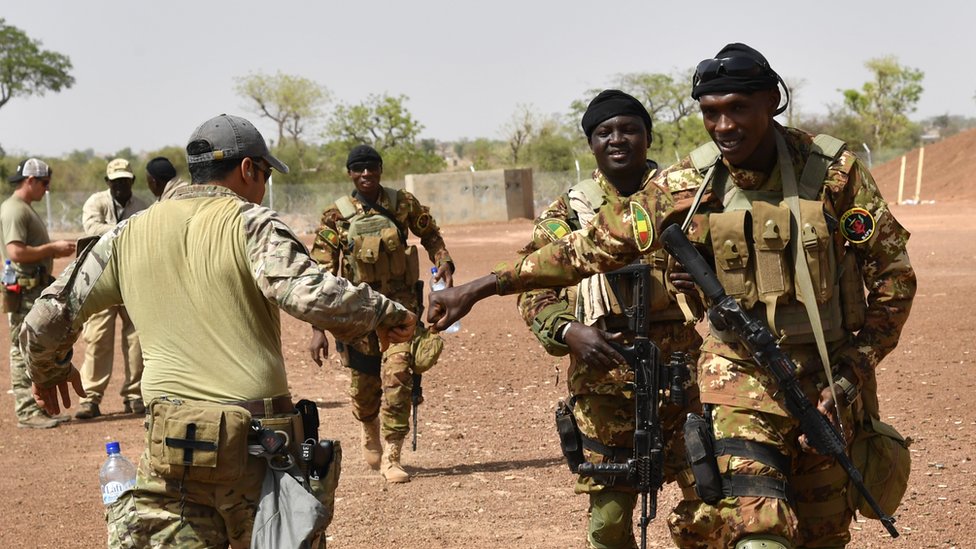
To grasp the scope of this earthquake, we must go back to 2020. Colonel Assimi Goïta takes power in Mali through a coup d'état. Two years later Bamako broke up with France, ended Operation Barkhane and demanded the departure of the UN mission Minusma. The pivot towards Moscow is assumed, claimed, presented as an act of sovereignty.
November 2023, Kidal's reconquest by the FAMA and Wagner's fighters is staged as a vivid proof of the relevance of this new partnership. Historical bastion of the Tuarègue rebellion, the city seemed definitely returned to Bamako. It was on this victory that the junta built its account of legitimacy.
The Alliance of Sahel States is formalized on 16 September 2023, bringing together Mali, Burkina Faso and Niger with Russia as an implicit security partner. In August 2025, Africa Corps officially took over Wagner's succession, supposed to embody a rise in professionalism. Less than a year later, this Africa Corps is negotiating its withdrawal from Kidal under enemy escort.
Source: BBC
Russia plays big in Africa
Since 2020, Moscow has carefully built its image as an alternative to the Western model in the Sahel, promising security and sovereignty without democratic conditions. The contract is lucrative. The Africa Corps collects about $10 million a month from Bamako, according to several consistent sources, plus shares on mining revenues and taxes on natural resources.. In return, Moscow has privileged access to Malian gold, a vital resource for a Russian economy strangled by Western sanctions.
This model has a condition of existence: hold the ground. On 25 and 26 April 2026, the Africa Corps exposed its structural limits to the open. Since the death of Evgeni Prigojine in troubled circumstances, after his attempted aborted insurgency, the new entity attached to the GRU, the powerful Russian military intelligence service, is still seeking its benchmarks. Unable to anticipate an offensive of this magnitude, forced to withdrawals often without combat, it reveals its operational rigidities in the face of highly mobile irregular groups.
What is notable, on the other hand, is the change in the group's communication posture since the fall of Kidal. Africa Corps, traditionally very discreet, has started to actively communicate on its operations via publications on X, sharing video footage of fighting around Bamako airport. A way to silence the criticisms about Kidal's withdrawal and remind that the group is still in battle. Sufficient to paint a seriously damaged image in African land? Nothing's safer.
Kidal's fall is part of a series of setbacks that go beyond the African continent alone. Since 24 February 2022, Russia has been enslaved in Ukraine. Despite its material superiority, it attacks a Ukrainian resistance that has exposed the flaws of an army long presented as invincible. Since then, Moscow's margin of manoeuvre has narrowed, most of its forces focused on the European front. Armenia, a traditional ally of Kremlin, lost Nagorny Karabakh to Azerbaijan in September 2023. In Syria, Bashar al-Assad was overthrown at the end of 2024, and the Russian army had to give up a key strategic position, seeing Turkey beat him up. In the Sahel, the battle of Tinzawatene in July 2024 had already marked a significant first setback. The April 25 attacks in Mali add a new chapter to this black series.
The fall of Kidal erodes the central narrative of Moscow in the region. African voices are beginning to openly question the effectiveness of the Russian partnership. The JNIM-FLA coalition was also built in part on a local resentment fuelled by the abuses attributed to the Russian-Male forces in the north and central part of the country, which gradually cut off the Malian army from the communities it was supposed to protect.
The silence of Burkina Faso and Niger is eloquent in this context. These two countries, yet linked to Mali by a mutual defence pact within AES, have not moved. If Mali crumbles, the entire regional building is threatened. Russia faces a serious risk of its regional investment in weapons, instructors and mining positions.
The War of Stories
In the media, the battle is just as palpable. Since the beginning of the attacks, a real war of narratives has begun on social networks. On the one hand, supporters and activists close to AES are working to project the image of a strong and resilient Mali, a solid Russian-Male collaboration and a situation that would be under overall control. On the other hand, the junta's detractors, whether they are supporters of the Azawad or French observers who follow the events with a mixture of irony and anxiety, point to the unwarranted withdrawals, fallen cities and abandoned weapons.
In this informational chaos, the proven facts and the intoxicates come together. Caution is needed, especially as Russia excels in this exercise. Moscow has long developed a disinformation infrastructure in Africa, mobilizing relay activists, coordinated influence campaigns and stories built on the real traumas of neocolonialism and the opacities of Françafrique. These narratives have a real hold on Sahelian populations. They allow Moscow to maintain its story, even when its troops retreat.
Impacts beyond Mali
Before analysing regional consequences, one must avoid a pitfall: burying Mali too quickly. In the autumn of 2025, when JNIM imposed a severe blockade on fuel supplies to Bamako, blocking roads from Senegal and Mauritania and causing widespread shortages, endless queues and transport paralysis, many experts put the country on hold. Mali had resisted. The resilience of populations and institutions, even if weakened, must never be underestimated.
However, Sahelian security dynamics are undergoing structural change. The Sahel is no longer a space for fragmented and isolated conflicts. Several analysts are now talking about an insurgent, interconnected, evolutionary ecosystem where groups collectively learn to coordinate their actions and project themselves into new territories. The pressure will move.
Mauritania, with its long Malian border already exposed to point incursions, could become a strategic corridor for groups seeking new projection spaces. Côte d'Ivoire, despite its relative stability, remains vulnerable in its northern regions weakened by the security degradation of neighbouring Burkina Faso. Benin and Togo have already suffered incursions on their soil. Progress towards the coastal countries of the Gulf of Guinea is out of the question.
In economic terms, Mali is cashing in the attacks in an already fragile state. A prolonged paralysis of the capital would increase inflation, accelerate investor flight and affect gold exports. The announcement by the JNIM of a total blockade of Bamako constitutes a major qualitative escalation.
Scenarios and perspectives
The first possible path is a vigorous response. A strong counter-offensive by the FAMA with Russian reinforcements, coupled with the mobilization of the AES, could lead to a rapid reconquest of the lost territories. Moscow, which cannot afford to lose Mali without leaving some of its African credibility there, could choose to step up its presence rather than retreat.
The second trajectory is darker. The silencing settles, the territorial losses in the north consolidate and the internal contestation of the junta increases. A coup d'état has already been foiled, according to reports circulating on several networks, not yet officially confirmed.
For Russia, all options are expensive. To anchor more in Mali through reinforced mining contracts is to expose yourself to a long and uncertain war. To opt for a defensive posture is to compromise Moscow's ambitions in the Central African Republic, Libya and Sudan. Whatever the choice, the signal sent to African partners is that of a model that has shown its flaws.
Bamako, for its part, chose rhetoric. The Malian government through its leader Assimi Goita in a speech denounced the « complex terrorist acts » financed by « external sponsors ».
Conclusion
Mali is at a turning point. The attacks of 25 and 26 April 2026 embody the relative failure of a model of sovereignty built on the rejection of the West and the security delegation to an external partner. Russia promised security without interference. Today, it delivers non-combat withdrawals and abandoned positions.
Mali did not die. He's already survived terrible predictions. But lucidity is necessary. General Paul-Henri Sandaogo Damiba, former President of Burkina Faso and author of the book « West African armies and terrorism: uncertain answers? »The military response alone is not enough. Without governance, without development, without dialogue with communities, security remains a roof without foundations.
The JNIM-FLA coalition, however tactical and fragile, reveals this flaw. Two groups with radically opposite ideologies found, in the absence of a political response to their respective grievances, sufficient reason to fight side by side. It is this vacuum that Russian tanks cannot fill.
The future of AES and Russian influence in sub-Saharan Africa is played largely in the dunes and garrisons of Mali. For now, what the dunes say is not in favor of Bamako or Moscow.
In a Sahel in the midst of a geopolitical recomposition, people pay the high price of the ever-great game of powers.
Sources : Sahelian analysts (social networks), JNIM claims via SITE Intelligence, press releases from the Malian government, France 24, Reuters, RFI, Clément Molin (Geopolitical Analyst), Paul-Henri Sandaogo Damiba, « West African armies and terrorism: uncertain answers? ». Article drawn up on the basis of information available on 29 April 2026. The situation is changing rapidly.